
What AI agents 2026 actually are
The era of simple prompts is over. In 2026, AI agents are no longer just chatbots that answer questions; they are semi-autonomous systems that perceive, reason, and take real-world actions to achieve goals without human approval at every step. Unlike traditional tools that wait for instructions, agents operate in a continuous loop: they plan, act, observe the results, and adapt until the task is complete. This shift moves AI from a passive assistant to an active participant in enterprise workflows.
This transition is most visible in technical operations. In IT ops, an agent can detect a server latency spike, diagnose the root cause by cross-referencing logs, and apply a patch before a human engineer is even alerted. In software development, agents manage end-to-end coding tasks, writing code, running tests, and fixing bugs iteratively. These systems execute entire workflows rather than helping individual workers with isolated tasks, fundamentally changing how teams distribute labor.
However, these systems are not autonomous employees. They remain brittle and heavily dependent on human supervision. The 2026 landscape is defined not by full automation, but by human-AI symbiosis, where governance frameworks ensure agents operate within safe, predefined boundaries. The organizations that succeed are those that integrate these agents into production workflows while maintaining clear oversight, ensuring the technology serves as a robust extension of human capability rather than a replacement.
Architecting reliable agent workflows
The era of simple prompts is over. As organizations move from innovation labs to production workflows, the challenge shifts from whether to build agents to how to deploy them reliably. The core of this transition lies in the "plan, act, observe" loop, a continuous cycle where AI perceives, reasons, and takes real-world actions without human approval at every step.
However, true reliability comes from treating these systems not as autonomous employees, but as semi-autonomous tools that require structured oversight. A robust workflow balances the speed of automation with the precision of human governance. Below is a step-by-step guide to structuring an agent workflow that prioritizes stability and clear accountability.

Start by explicitly defining the agent's goal and its boundaries. Unlike a chatbot that answers questions, an agent performs tasks. Clearly state what the agent is allowed to do and, more importantly, what it is forbidden from touching. This includes setting hard limits on data access, API endpoints, and financial thresholds. A well-defined scope prevents drift and ensures the agent stays focused on the specific business outcome.
Before execution, the agent must generate a plan. This step involves breaking the high-level goal into discrete, verifiable sub-tasks. The reasoning layer evaluates the best sequence of tools or APIs to complete these sub-tasks. By forcing the agent to outline its approach first, you create a checkpoint for logic errors. This plan can be logged for audit purposes, providing visibility into the agent's decision-making process before any live action is taken.
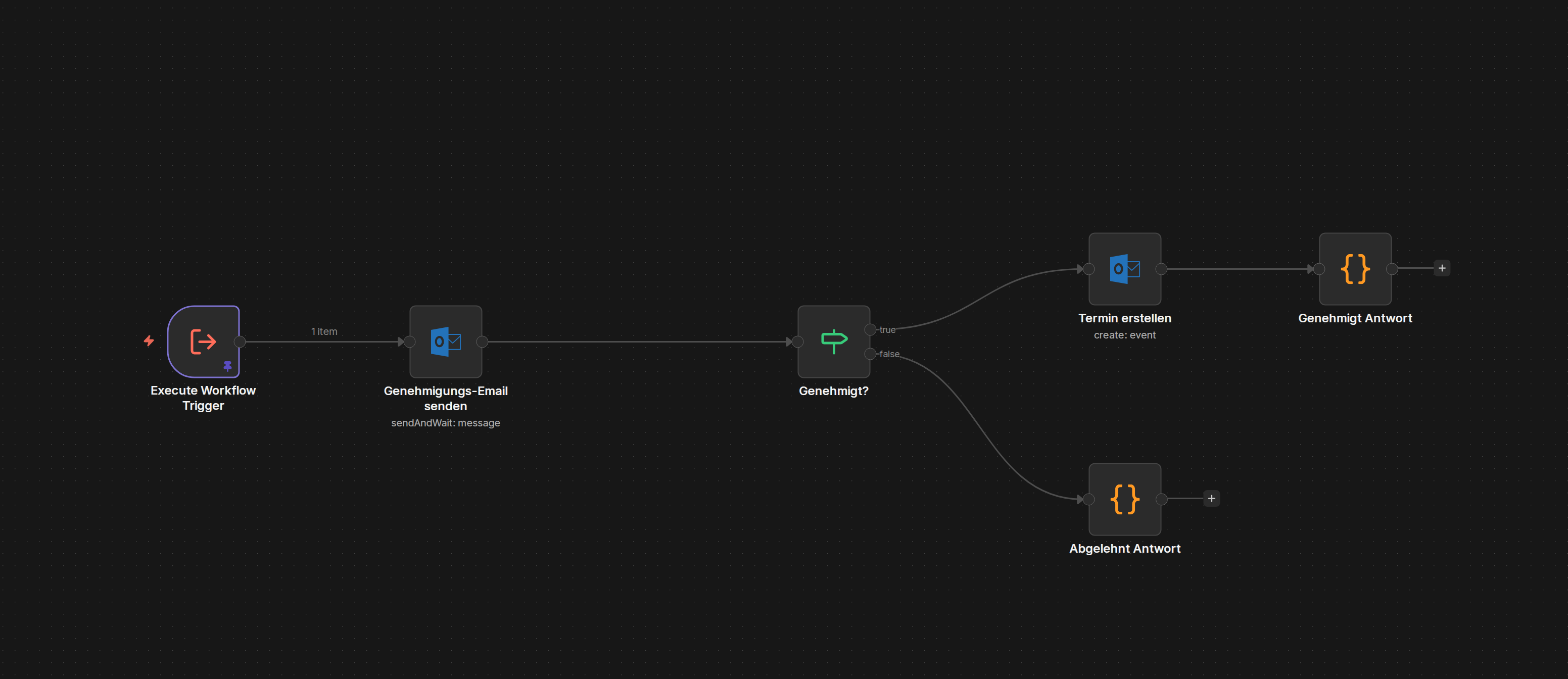
During execution, the agent acts on the plan. This is where guardrails come into play. For high-risk actions—such as deploying code to production or approving refunds—insert a human-in-the-loop approval step. The agent pauses its workflow and waits for explicit confirmation. This symbiotic approach allows the AI to handle the heavy lifting of preparation and data gathering, while humans retain final authority over critical decisions. This balance is essential for maintaining trust in automated systems.
Once an action is complete, the agent must observe the outcome. This involves checking system responses, verifying data integrity, and comparing the result against the original goal. If the outcome is unsatisfactory, the agent can self-correct by adjusting its plan and trying again. This feedback loop is what distinguishes a modern agent from a simple script. It allows the system to learn from failures and adapt to dynamic environments without requiring constant human intervention.
The final step is continuous review. Regularly analyze the agent's performance logs to identify patterns of failure or inefficiency. Use this data to refine the initial scope, adjust the reasoning prompts, or update the guardrail thresholds. This iterative process ensures that the agent workflow evolves alongside your business needs, maintaining reliability as the complexity of tasks increases.
To illustrate how this looks in practice, consider a pseudo-code structure for an agent loop with a human-in-the-loop approval step. This example demonstrates how the logic flows from planning to execution, pausing for human input when necessary.
Implementing this structured approach transforms AI agents from brittle experiments into reliable production assets. By embedding human oversight into the core loop, you ensure that automation enhances productivity without compromising governance or accuracy.
Top AI agent frameworks for 2026
The landscape has shifted from experimental prototypes to production-ready tools. In 2026, the focus is on frameworks that balance autonomy with strict governance, ensuring agents operate reliably within enterprise constraints. You are no longer just building a chatbot; you are orchestrating systems that plan, act, and adapt in real-time.
The following frameworks dominate the current market for building enterprise-grade agents. They are selected based on their ability to handle complex workflows, integrate with existing IT infrastructure, and provide the visibility required for secure deployment.
Choosing the right framework depends on your primary use case. For complex, stateful workflows requiring human oversight, LangGraph offers the most control. For collaborative, role-based tasks, CrewAI provides a more intuitive structure. Always prioritize frameworks that offer clear observability and audit trails, as governance remains the primary barrier to scaling AI agents in production.
Implementing governance and safety
As organizations move AI agents from innovation labs to production workflows, the focus shifts from capability to control. In 2026, successful enterprises are no longer asking whether to build agents, but how to deploy them reliably within enterprise constraints. This requires a shift from simple prompt engineering to comprehensive agent governance, ensuring systems operate safely without stifling their utility.
Establishing Guardrails
Guardrails act as the perimeter for agent behavior, preventing deviations that could lead to data leaks or operational errors. Instead of relying solely on the model’s internal alignment, implement explicit constraints at the application layer. For example, in an IT operations workflow, guardrails can restrict an agent to read-only access for specific logs, while permitting write access only to approved restart commands. This separation ensures that even if an agent hallucinates a task, it lacks the permissions to execute harmful actions.
Observability and Tracing
You cannot govern what you cannot see. Implementing end-to-end observability is critical for tracking agent decisions in real time. Unlike standard API calls, agent workflows involve complex loops of planning, acting, and observing. Tools that trace these steps allow engineers to audit why an agent chose a specific tool or interpreted a prompt in a certain way. This visibility is essential for debugging brittle behaviors and understanding the "black box" decisions that occur during autonomous execution.
Evaluation Metrics
Traditional accuracy metrics are insufficient for autonomous agents. Instead, evaluate agents based on task completion rates, tool usage efficiency, and adherence to safety protocols. For instance, in a coding agent scenario, success isn't just about generating working code; it's about whether the agent correctly identified the bug, selected the right API, and avoided introducing security vulnerabilities. Regular stress testing against edge cases ensures the agent remains reliable under pressure, maintaining human-AI symbiosis rather than replacing human judgment.
Common Pitfalls in Agent Deployment
Moving from prototype to production reveals where most AI agent projects stall. The gap between a demo that works in isolation and a system that survives in a live enterprise environment is wide. Organizations often underestimate the operational complexity required to keep autonomous systems reliable. Without strict boundaries, agents can drift from their intended goals or consume excessive compute resources.
Over-Automation and Lack of Guardrails
The most frequent error is granting agents too much autonomy too soon. In coding workflows, an agent might refactor code without understanding the broader architectural context, introducing subtle bugs that only surface in production. Similarly, in IT operations, an agent with unrestricted access to infrastructure tools might delete critical resources while trying to optimize costs.
Human-AI symbiosis requires clear handoff points. Agents should handle the heavy lifting of data retrieval and initial analysis, but humans must approve actions that alter state. This "human-in-the-loop" approach prevents catastrophic errors and ensures that the agent’s reasoning aligns with business logic.
Ignoring Observability and Monitoring
Treating agents as black boxes is a recipe for failure. Unlike traditional software with fixed logic, agents generate non-deterministic outputs. You need comprehensive observability to track not just the final result, but the reasoning path, tool usage, and latency at each step. Without detailed logs, debugging a failed agent interaction becomes a guessing game.
Warning: Avoid treating agents as black boxes; observability is non-negotiable. You cannot improve what you cannot measure.
Effective monitoring involves tracking key metrics like token consumption, tool call success rates, and user satisfaction scores. This data allows teams to identify patterns in agent failures and refine prompts or tool definitions before they impact end-users.
Poor Prompt Engineering and Context Management
Agents are only as good as their instructions. Vague prompts lead to inconsistent behavior, especially when the agent encounters edge cases. In 2026, the focus has shifted from simple prompt writing to engineering robust agent frameworks that manage context windows effectively.
Context overflow is a common technical pitfall. As agents accumulate conversation history or tool outputs, they may lose track of the original task. Implementing memory management strategies, such as summarizing past interactions or retrieving only relevant context, ensures the agent stays focused on the current objective.
Your 2026 AI agent deployment checklist
Before moving an AI agent from prototype to production, you must verify that your infrastructure can handle autonomous decision-making without breaking existing workflows. The gap between a successful demo and a reliable production system is usually governance, not model capability. This checklist ensures your team is ready to deploy agents that augment human work rather than replace it unpredictably.
Deployment Readiness Verification
- Define clear boundaries: Specify exactly what the agent can do and what requires human approval. For example, allow coding agents to merge PRs but block database schema changes.
- Implement human-in-the-loop gates: Ensure critical actions trigger a review step. This prevents runaway costs and maintains accountability for high-stakes decisions.
- Test with real data: Run agents against sanitized production data to catch edge cases that synthetic tests miss. Observe how the agent handles errors and unexpected inputs.
- Monitor drift and performance: Set up alerts for latency spikes or accuracy drops. Agents can degrade over time as underlying APIs or business logic changes.
- Establish rollback plans: Have a one-click way to disable the agent if it starts causing issues. Autonomy requires the ability to pause quickly.
Next Steps
Once these checks are complete, start with a limited rollout to a single team or workflow. Use the LangChain State of Agent Engineering report as a benchmark for industry standards. Gradually expand scope as you gain confidence in the agent's reliability and governance.
No comments yet. Be the first to share your thoughts!