
What AI agents 2026 actually do
AI agents are autonomous systems that perceive, reason, and take real-world actions to achieve goals without human approval at every step. Unlike chatbots, they operate in a continuous loop of plan, act, observe, and adapt until the task is complete. They are not autonomous employees; they are tools that execute specific, defined workflows.
The era of simple prompts is over. We are witnessing the agent leap, where AI orchestrates complex, end-to-end processes semi-autonomously. In 2026, the distinction between a helpful assistant and an autonomous agent is the ability to handle multi-step tasks across different applications without constant human intervention.
However, the hype often outpaces reality. While AI agents are everywhere in corporate decks, they remain brittle in practice. They require robust guardrails and human supervision to function reliably. The value lies not in replacing workers, but in augmenting workflows with systems that can handle the repetitive, complex, and time-consuming parts of enterprise operations.
AI Agents 2026: Tradeoffs and Evaluation Factors
As AI agents move from innovation labs to production workflows, the decision to deploy them is no longer binary. Organizations are shifting from asking whether to build agents to evaluating how to deploy them reliably, efficiently, and at scale. This transition requires a clear-eyed assessment of the concrete tradeoffs involved in integrating autonomous systems into enterprise environments.
The primary tension lies between autonomy and control. While agents can orchestrate complex, end-to-end workflows semi-autonomously, they often remain brittle in edge cases. Decision-makers must weigh the efficiency gains of reduced human intervention against the operational risks of errors that require significant remediation. The most successful implementations in 2026 are those that treat agents as semi-autonomous collaborators rather than fully independent employees, maintaining human oversight for critical decision points.
Cost structures have also evolved beyond simple token usage. Modern agent architectures involve multiple layers of reasoning, tool-use calls, and memory management, which can significantly inflate operational expenses. Evaluating the total cost of ownership requires looking at infrastructure, monitoring, and the human labor needed to maintain agent reliability over time. Without careful architectural choices, the cost of maintaining reliable agents can outweigh the productivity gains they provide.
| Evaluation Factor | Primary Benefit | Key Risk | Mitigation Strategy |
|---|---|---|---|
| Autonomy Level | Reduced manual effort | Error propagation | Human-in-the-loop checkpoints |
| Integration Depth | Seamless workflow automation | System fragility | Modular agent design |
| Cost Structure | Scalable efficiency | Unpredictable token costs | Usage caps and monitoring |
| Data Privacy | Faster data processing | Sensitive data exposure | On-premise deployment options |
To help you evaluate the potential financial impact of implementing AI agents in your specific context, use the calculator below to estimate operational costs based on your projected workload.
How to choose the next step for your AI agent strategy
The era of simple prompts is over. We are now witnessing an agent leap where AI orchestrates complex, end-to-end workflows semi-autonomously. For enterprise leaders, the question is no longer whether to adopt AI agents, but how to integrate them into existing operations without breaking them. This decision framework helps you move from experimentation to production workflows by evaluating your current maturity.

Identify repetitive, rule-based tasks that require minimal human judgment. These are the low-hanging fruit for initial agent deployment. Look for processes where errors are costly but corrections are standardized. Start with tasks that have clear inputs and outputs, such as invoice processing or routine customer support triage, to build confidence in the technology.
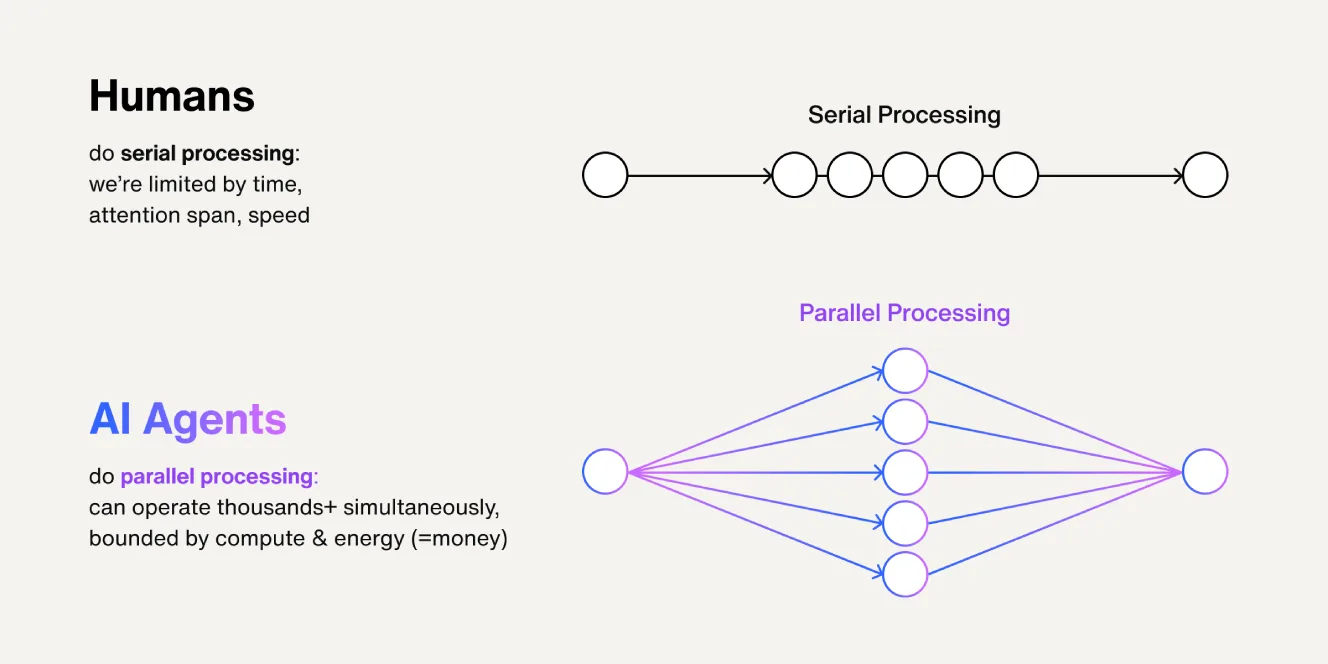
AI agents need permission to act. Before deploying, map out which systems and data sets the agent will need to access. This is where most enterprise deployments stall. Ensure your security protocols allow for semi-autonomous action without compromising sensitive information. Define clear boundaries for what the agent can do versus what requires human approval.

Not all agents are built the same. Choose between single-task agents for specific functions or multi-agent systems for complex, multi-step workflows. Google Cloud’s 2026 report highlights that organizations moving first will set the pace. Match the architecture to the complexity of your workflow. Simple tasks need simple agents; complex, cross-departmental tasks need orchestrated multi-agent systems.
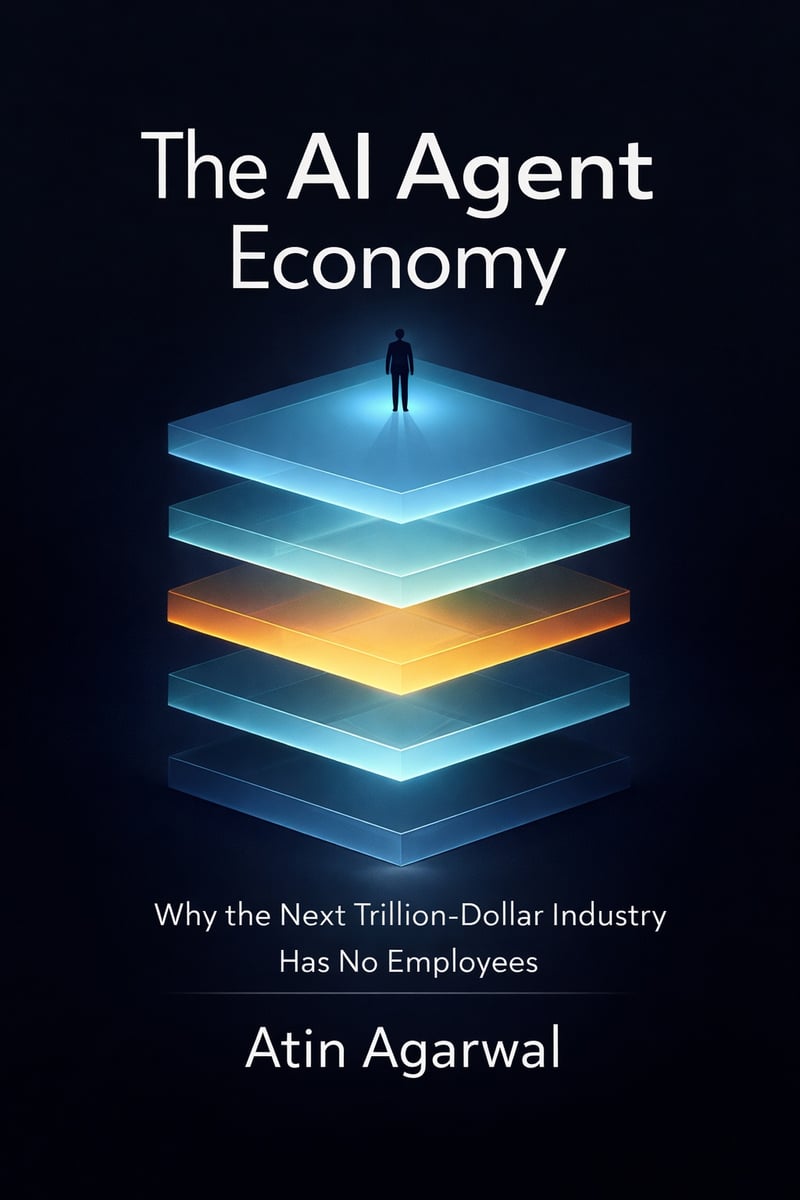
Despite the hype, AI agents remain unreliable and heavily dependent on human supervision. They are not autonomous employees. Build in checkpoints where humans can review and approve critical actions. This hybrid approach ensures that the efficiency gains of AI agents do not come at the cost of accuracy or compliance. Treat agents as junior colleagues who need oversight, not replacements.
Define clear metrics for success before you launch. Track time saved, error reduction, and user satisfaction. Use these data points to refine the agent’s behavior and expand its scope. Continuous improvement is key to realizing the full potential of the AI agent economy. Start small, measure rigorously, and scale only when the results are proven.
The 2026 AI agent landscape is moving fast. Organizations that approach this technology with a structured, cautious framework will outperform those chasing hype. Focus on practical integration, robust security, and continuous measurement to turn AI agents into genuine enterprise assets.
Spotting Weak AI Agent Options
The gap between vendor marketing and production reality is wide. Many "autonomous" systems are simply scripted chatbots with expensive API calls. Before committing enterprise budget, audit the following three areas where most implementations fail or deliver negligible value.
1. Vague Autonomy Claims
Many vendors claim full autonomy, but true AI agents operate in a continuous loop of plan, act, observe, and adapt (Cogitx, 2026). If a system requires human approval for every step, it is not an agent; it is a sophisticated automation tool. Look for clear definitions of decision boundaries. If the vendor cannot specify exactly where human oversight is required, the system is likely brittle and prone to silent failures.
2. Ignoring Integration Costs
An AI agent is only as useful as its ability to interact with existing enterprise software. The biggest mistake is buying an agent that cannot natively connect to your CRM, ERP, or internal databases. Google Cloud notes that the "agent leap" involves orchestrating end-to-end workflows (Google Cloud, 2026). If you need to build custom connectors for every major tool, the integration cost will likely exceed the value of the automation itself.
3. Underestimating Supervision
Despite the hype, 2026 AI agents remain heavily dependent on human supervision (Las Vegas Sun, 2026). They are not autonomous employees. Calculate the cost of the human reviewer needed to catch hallucinations or logic errors. If the supervision time exceeds the time saved by the agent, the workflow is a net loss. Treat agents as junior assistants, not senior executives.
Ai agents 2026: what to check next
Organizations are moving past the experimental phase, but practical deployment brings new scrutiny. Here are the most common questions about how AI agents function and perform in enterprise settings today.
No comments yet. Be the first to share your thoughts!