
The 2026 reality of ai agent limits to account for
By 2026, the hype around autonomous agents has collided with the hard limits of enterprise infrastructure. The promise of fully self-running workflows is no longer a question of if, but how tightly those agents are constrained. Early adopters found that without strict guardrails, agents hallucinate, overstep permissions, and drain compute budgets faster than they generate value.
The primary constraint is no longer model intelligence, but operational control. Enterprises are shifting from "build an agent" to "build a cage." This means defining explicit boundaries for data access, action scope, and decision authority. An agent should not be able to delete a production database or approve a refund without human verification. These constraints are not bugs; they are the core product feature.
Consider the tradeoff between autonomy and accuracy. A highly constrained agent might only draft responses, requiring human approval before sending. This slows velocity but ensures compliance. A less constrained agent might execute trades or update CRM records automatically, speeding up processes but introducing significant risk. The right balance depends on your risk tolerance and the criticality of the task.
To navigate this, leaders must audit their agent architectures for three things: data isolation, action permissions, and fallback protocols. If an agent fails, does it stop safely or cascade errors? If it accesses sensitive data, is it isolated from other tenants? These are the practical checks that separate viable pilots from scalable deployments.
The calculator above offers a rough heuristic for balancing autonomy against data sensitivity. Higher sensitivity and lower human oversight naturally drive the risk score up. Use this as a starting point for internal discussions, not as a final verdict. Each enterprise context requires a tailored risk assessment.
Ultimately, the 2026 agent economy is defined by those who treat constraints as features. By limiting what agents can do, you increase what they can reliably achieve. The most successful implementations are not the most autonomous, but the most disciplined.
Ai agents 2026 choices that change the plan
Selecting an autonomous agent for enterprise use requires balancing speed against control. The 2026 landscape distinguishes between agents that execute single tasks and those that orchestrate complex workflows. Understanding these differences prevents costly integration errors.
The following comparison outlines the primary tradeoffs across four critical dimensions. Use this data to evaluate which agent type aligns with your specific operational risk and efficiency goals.
| Dimension | Reactive Agents | Orchestrator Agents | Fully Autonomous |
|---|---|---|---|
| Speed | High (milliseconds) | Medium (seconds) | Variable (minutes/hours) |
| Control Level | High (human-in-loop) | Medium (approval gates) | Low (post-audit only) |
| Complexity Handling | Single step only | Multi-step workflows | End-to-end processes |
| Error Recovery | Immediate fallback | Manual intervention | Self-correction attempts |
| Implementation Cost | Low | Medium | High |
Most enterprises start with reactive agents for high-volume, low-risk tasks like customer support triage. Orchestrator agents are necessary for cross-departmental workflows, such as supply chain adjustments. Fully autonomous agents remain experimental for most financial or legal applications due to compliance risks.
ROI Estimator
Use this calculator to estimate the potential annual savings from implementing agentic AI in your specific context. Adjust the inputs based on your current operational metrics.
How to Choose the Right AI Agent Strategy
Selecting an AI agent architecture requires matching technical capability to business risk. Rather than adopting the most autonomous system, evaluate your enterprise against these four decision criteria. This framework prioritizes ROI predictability and trust governance, ensuring your implementation survives regulatory scrutiny and operational reality.

Distinguish between efficiency agents and revenue agents. Efficiency agents reduce operational costs through automation, offering immediate, measurable ROI. Revenue agents drive new income streams but require longer development cycles. Calculate the payback period for each candidate; if it exceeds 18 months, the agent may not justify the infrastructure investment in a high-stakes environment.
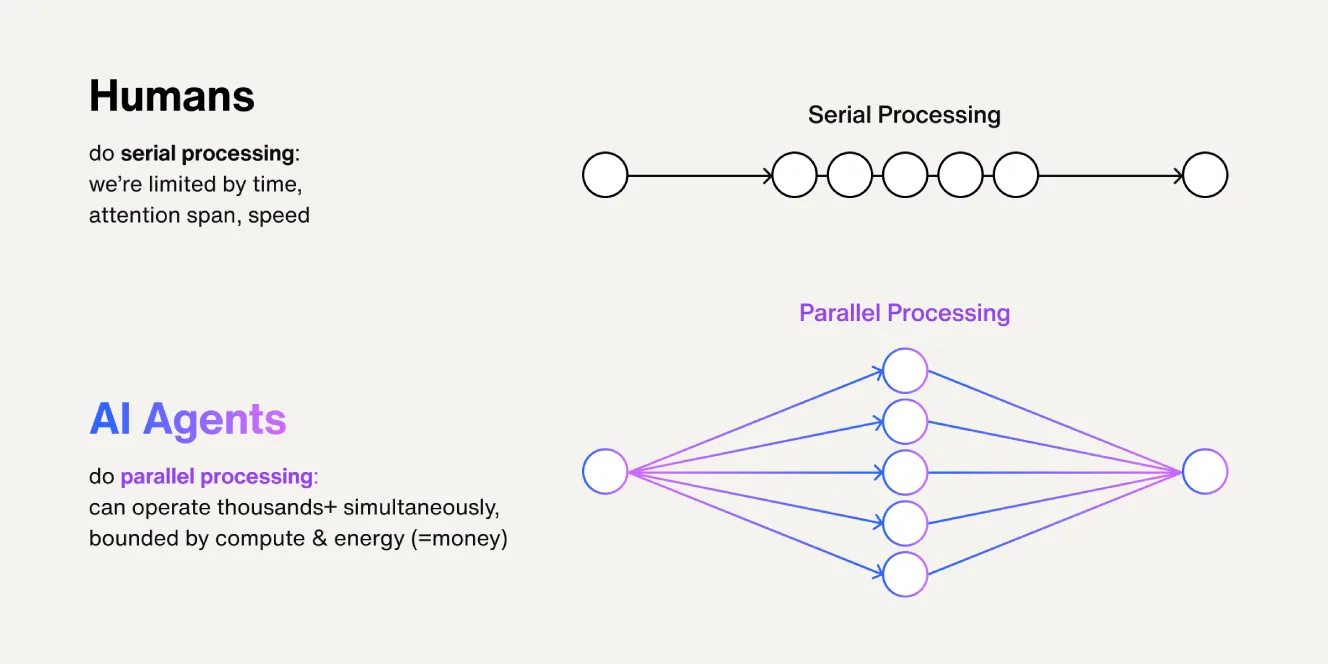
Establish hard boundaries for agent decision-making. High-stakes finance and healthcare sectors rarely tolerate fully autonomous execution. Set a "human-in-the-loop" threshold for transactions or decisions above a specific dollar amount or risk score. Agents should propose actions; humans should approve high-impact outcomes to maintain regulatory compliance and trust.
Evaluate the agent’s reliance on generative models versus deterministic logic. For compliance-heavy tasks, prefer agents that use retrieval-augmented generation (RAG) with strict citation requirements over open-ended chatbots. Test the agent against adversarial prompts to measure its failure rate. A 2% error rate in a financial agent can result in significant liability, necessitating more restrictive guardrails.
Ensure the agent architecture complies with data residency laws. Agents processing sensitive customer data must operate within approved geographic boundaries. Verify that the underlying model provider does not retain input data for training. Choose enterprise-grade models with clear data isolation guarantees to prevent intellectual property leakage and regulatory violations.
Use the calculator below to estimate the total cost of ownership for your proposed agent, including infrastructure, latency, and human oversight costs.
Common AI Agent Mistakes That Erode ROI
Enterprise leaders often promise transformative automation but deliver fragmented tools that drain budgets. The gap between vendor marketing and actual deployment is where trust breaks down. To protect your investment, scrutinize these three frequent pitfalls before signing contracts.
Ignoring Data Lineage and Governance
Autonomous agents require clean, accessible data to function. Many organizations assume their existing infrastructure is ready, only to find that data silos prevent agents from acting with confidence. Without strict governance, agents may hallucinate or make decisions based on outdated records. Always audit your data pipelines for real-time accuracy before deploying autonomous workflows.
Overestimating Immediate Scalability
Vendors often claim agents can scale instantly across all departments. In reality, scaling requires significant tuning for context and security protocols. Jumping into broad deployment without pilot testing leads to costly errors and compliance violations. Start with a single, well-defined use case to validate performance before expanding.
Underestimating Human Oversight Needs
Full autonomy is a myth for high-stakes operations. Agents still require human-in-the-loop checkpoints for critical decisions. Skipping this step exposes your business to reputational and financial risk. Build oversight into your workflow design from day one, ensuring clear boundaries for agent authority.
Ai agents 2026: what to check next
Before committing budget to autonomous agents, address the operational realities. The market has shifted from experimental prompts to semi-autonomous orchestration of end-to-end workflows. These questions clarify the tradeoffs between speed, control, and cost.
These frameworks help you move beyond hype. Focus on concrete checks: data security, control mechanisms, and clear ROI metrics. This approach ensures your investment in AI agents delivers measurable value without compromising operational integrity.
No comments yet. Be the first to share your thoughts!