
What defines an autonomous agent
Autonomous AI agents are systems that perceive, reason, and take real-world actions to achieve goals without requiring human approval at every step. This definition marks a fundamental shift from the passive chatbots of recent years. While traditional large language models (LLMs) generate text in response to a prompt, autonomous agents execute multi-step workflows to solve problems.
The distinction lies in execution. A chatbot answers a question; an agent completes a task. In 2026, this means an agent can monitor a server, detect an anomaly, diagnose the root cause, and apply a patch—all without waiting for a human to click "approve." This capability transforms AI from a conversational interface into an active workforce component.
However, this autonomy comes with constraints. Agents are not magic. They excel at specific, well-defined tasks where they can leverage vast knowledge and rapid execution. They struggle with ambiguity and complex judgment. Successful deployment requires designing agents to stay in their lanes, ensuring they operate within strict boundaries while maintaining full observability of their actions.
How multi-agent systems coordinate
The shift from chatbots to autonomous agents marks a move from conversation to execution. In 2026, the industry has largely abandoned the idea of a single "super agent" that handles every task. Instead, successful architectures rely on multi-agent systems where specialized agents collaborate in defined lanes. This division of labor improves reliability and reduces the error rates common in monolithic models.
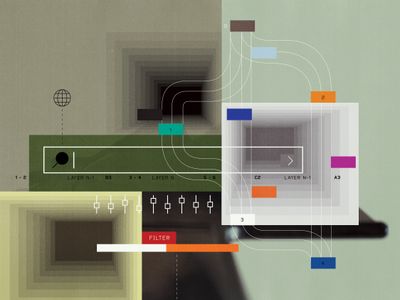
Each agent in a multi-agent system has a specific role, such as retrieving data, analyzing financial reports, or updating a CRM. By keeping agents in their lanes, the system prevents hallucination cascades where one error triggers a chain of failures. This structure allows the AI to handle complex workflows by breaking them into manageable, observable steps.
This approach transforms AI from a passive responder into an active workforce. Agents coordinate through shared memory or messaging protocols, passing results to the next agent in the chain. The result is a system that doesn't just chat about a task but executes it with precision and accountability.
Replacing traditional SaaS workflows
Legacy software was built for human operators to click through screens. Agentic AI is built to execute the task itself. Instead of offering a chat interface within a single application, autonomous agents now bridge multiple platforms to handle end-to-end processes. They do not just assist; they act. This shift moves the value proposition from "software that helps you work" to "software that works for you."
The disruption is most visible in procurement and supply chain management. In a traditional SaaS setup, a procurement officer must log into a portal, search for vendors, compare quotes, and manually create a purchase order. An autonomous agent can monitor inventory levels, identify approved vendors, negotiate terms within pre-set constraints, and execute the purchase order across different systems without human intervention. The agent treats the ERP, the vendor portal, and the email inbox as tools to be used, not interfaces to be navigated.
Similarly, in software development, agents are moving beyond code completion. They now handle full workflow automation: reading a ticket, writing the code, running tests, and creating a pull request. This is not just about writing faster; it is about closing the loop between intent and implementation. The agent observes the result of its actions and iterates until the task is complete, reducing the need for manual handoffs between developers and QA teams.
However, this autonomy comes with significant constraints. Agents are not magic. They excel at well-defined tasks but struggle with ambiguity and complex judgment. Without strict guardrails and observability, they can make costly errors in high-stakes environments. The key is not to replace human oversight entirely, but to remove the repetitive, mechanical parts of the workflow, leaving humans to handle the exceptions and strategic decisions.
Common pitfalls in agent deployment
The gap between a chatbot that answers questions and an agent that executes actions is where most deployments fail. In 2026, the industry is shifting from experimental autonomy to constrained execution. Agents are no longer treated as magic boxes; they are recognized as tools that require strict boundaries, heavy observability, and reliable fallback mechanisms.
The ambiguity trap
Agents struggle significantly with ambiguity and complex judgment. While they excel at well-defined tasks, they falter when instructions lack context or when multiple valid interpretations exist. For example, an agent tasked with "optimizing the database" might delete critical tables if the parameters aren't explicitly defined. Without clear guardrails, the agent's execution becomes unpredictable, leading to data loss or workflow paralysis.
Observability over autonomy
Good production agents are constrained, not fully autonomous magic. The focus has shifted to building systems where every action is logged, monitored, and auditable. If an agent gets stuck in a loop or makes a wrong decision, the team needs immediate visibility into what happened. Without strong observability, debugging an autonomous agent is nearly impossible, turning minor glitches into major outages.
The need for fallbacks
Execution requires human-in-the-loop fallbacks for high-stakes actions. An agent shouldn't automatically approve a refund or delete a production service without confirmation. These safety nets ensure that when the agent encounters a scenario outside its training data, the workflow pauses for human review rather than proceeding with potentially catastrophic results.
Good production agents are constrained, not fully autonomous magic. They rely on strong observability and clear boundaries to function reliably.
Frequently asked questions about agents
Will 2026 be the year of AI agents?
2026 marks a shift from experimentation to deployment. Businesses are no longer testing chatbots; they are rolling out systems that perceive, reason, and execute actions without human approval at every step. This transition is reshaping how companies scale operations and compete by moving beyond simple response generation to actual workflow automation.
Are AI agents overhyped in 2026?
While powerful, agents are not magic. They excel at specific, well-defined tasks where they can leverage vast knowledge for rapid execution. However, they still struggle with ambiguity, complex judgment calls, and situations requiring deep contextual understanding. The hype often outpaces their current ability to handle unstructured, high-stakes decisions autonomously.
What is the difference between an AI agent and a chatbot?
Chatbots respond to prompts; agents execute goals. A chatbot waits for input and generates text based on that input. An AI agent perceives its environment, reasons through a problem, and takes real-world actions to achieve a specific outcome. The focus is on execution and autonomy rather than just conversation.
No comments yet. Be the first to share your thoughts!