
What is an autonomous agent?
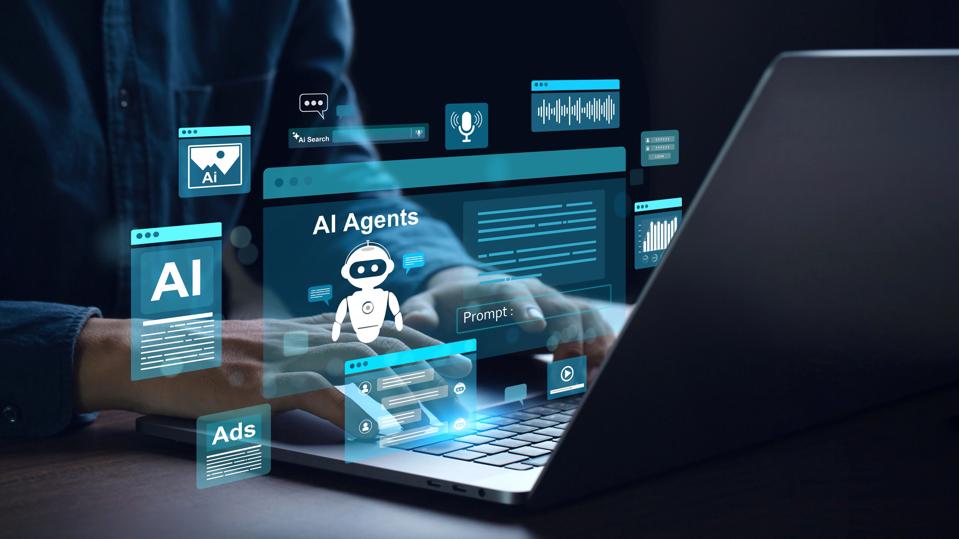
An autonomous agent is an AI system that perceives its environment, reasons about a goal, and takes real-world actions to achieve it without human approval at every step. This definition, widely cited in 2026 industry overviews, marks the shift from reactive tools to proactive workers. Unlike traditional chatbots that wait for a prompt and stop after generating a response, autonomous agents operate in a loop: they observe, plan, execute, and verify results independently.
The distinction lies in agency. A chatbot is a passive instrument; you use it to write an email or summarize a document. An autonomous agent is an active participant. It combines advanced AI intelligence with the ability to use external tools—such as APIs, databases, or software interfaces—to act on your behalf. It doesn't just suggest a course of action; it performs the tasks required to complete the workflow.
In an enterprise context, this autonomy transforms how work gets done. Instead of humans manually moving data between systems or approving every minor transaction, agents handle the execution. They monitor conditions, make decisions based on predefined rules and real-time data, and adjust their strategies if obstacles arise. This capability allows organizations to scale operations beyond the limits of human attention, turning AI from a co-pilot into a full-fledged team member.
The 2026 adoption landscape
The enterprise software market is undergoing a structural shift that moves beyond the current era of passive assistance. We are transitioning from tools that wait for commands to digital workforces that act on their own. This change is not merely incremental; it represents a fundamental redefinition of how enterprise applications function within an organization.
According to research from Gartner, 40% of enterprise applications will include task-specific AI agents by 2026, a sharp increase from less than 5% in 2025. This statistic highlights the rapid pace at which autonomous capabilities are being embedded into core business systems. The focus is shifting from assistive tools, which require constant human oversight, to complete digital workforces capable of executing complex, multi-step tasks independently.
This adoption curve suggests that the primary value proposition of enterprise software is changing. It is no longer just about data visualization or workflow management; it is about execution. As these agents become standard features in applications, they will handle routine operations, freeing human workers to focus on higher-level strategy and exception handling. The integration of autonomous AI agents is becoming the new baseline for competitive enterprise software.
Archetypes of coding agents
The enterprise shift toward autonomous AI agents is not a monolith. As these tools mature, they are splitting into distinct operational archetypes, each designed for a specific layer of the software development lifecycle. Understanding these categories helps engineering leaders map the right agent to the right problem, moving beyond the generic "AI coder" label.
CLI-first agents
These agents operate primarily through the command line, treating the terminal as their main interface. They are designed for batch processing, infrastructure automation, and repetitive script execution. Rather than interacting with a graphical interface, they accept raw text prompts and output code or shell commands directly.
This archetype excels in DevOps environments where speed and scriptability matter more than visual feedback. They are often used for database migrations, log analysis, or generating boilerplate code for microservices. The interaction is linear and text-based, making them ideal for integration into CI/CD pipelines where human intervention is minimal.
IDE-native agents
IDE-native agents live inside the editor, providing real-time assistance as developers type. They understand the local file structure, open tabs, and project context, allowing them to suggest refactors, debug errors, or generate functions on the fly. This is the closest evolution of the traditional autocomplete tool, but with the ability to understand broader code semantics.
These agents are best suited for the "pair programming" phase of development. They help senior engineers move faster by handling syntax-heavy tasks and junior developers by explaining complex logic. The key value here is context awareness; unlike CLI tools, they "see" the codebase the developer is currently working in, reducing the friction of switching between tools.
Cloud engineering agents
Cloud engineering agents operate at the infrastructure layer, managing deployments, scaling resources, and monitoring system health in real time. They do not just write code; they execute it in the cloud, interacting with APIs from providers like AWS, Azure, or GCP. They are responsible for the "last mile" of software delivery, ensuring that what was built actually runs correctly in production.
This archetype represents the shift from code generation to autonomous execution. They can detect a spike in traffic and automatically provision new servers, or roll back a deployment if error rates exceed a threshold. For enterprises, this is where the true labor-saving potential lies, as it removes the need for human operators to monitor and adjust infrastructure constantly.
Designing specialized agent lanes
Use this section to make the Autonomous AI Agents decision easier to compare in real life, not just on paper. Start with the reader's actual constraint, then separate must-have requirements from details that are merely nice to have. A practical choice should survive normal use, maintenance, timing, and budget. If a recommendation only works in an ideal situation, call that out plainly and give the reader a fallback path.
The simplest way to use this section is to write down the must-have criteria first, then compare each option against those criteria before weighing nice-to-have features.
Multi-agent orchestration patterns
Single-agent systems struggle with complex, multi-step business processes. They lack the context to handle tasks that require distinct phases, such as a sales cycle that moves from lead qualification to contract generation. Multi-agent orchestration solves this by connecting specialized agents into a coordinated workflow.
In this model, each agent acts as a specialist with a specific role. One agent might analyze customer data, while another drafts personalized proposals. A supervisor agent routes tasks between them, ensuring that the output of one step becomes the input for the next. This division of labor mimics how human teams operate, reducing errors and increasing throughput.
Orchestration patterns vary based on complexity. Simple chains handle linear tasks, while more advanced graphs allow agents to branch and merge based on real-time decisions. For example, if an agent detects a compliance risk, it can route the task to a legal review agent before proceeding. This flexibility allows enterprises to build robust, autonomous business ecosystems that adapt to changing conditions without constant human intervention.
Autonomous AI Agents 2026 FAQ
As autonomous AI agents move from pilot programs to enterprise workforces, leadership teams face practical questions about readiness, scope, and implementation. Below are the most common inquiries regarding how these systems operate in 2026.
KeyTakeaways items=["Agents act autonomously to achieve goals without step-by-step human approval.","Adoption is shifting from chat-based assistance to autonomous execution loops.","Gartner predicts 40% of enterprise applications will include AI agents by 2026."]
No comments yet. Be the first to share your thoughts!