
What AI Agents 2026 Actually Cost
The era of simple prompts is over. According to Google Cloud’s 2026 trends report, we are witnessing an "agent leap" where AI orchestrates complex, end-to-end workflows semi-autonomously. This shift from passive chatbots to active agents fundamentally changes your total cost of ownership (TCO). You are no longer paying just for token generation; you are paying for state management, tool-use loops, and the compute required to keep these systems running reliably.
Databricks’ State of AI Agents report highlights that enterprise priorities have moved beyond experimental pilots to production-grade infrastructure. The cost drivers are distinct: compute intensity for reasoning, memory costs for maintaining context windows, and orchestration overhead for coordinating multiple tools. Ignoring these factors leads to budget overruns that can cripple ROI before the agent delivers value.

To navigate this new cost structure, you must move beyond rough estimates. The calculator below allows you to model your specific deployment based on these three core drivers. By inputting your expected transaction volume and complexity, you can forecast the true financial impact of deploying autonomous agents in 2026.
Calculate Your Agent Deployment Budget
Estimating the total cost of ownership (TCO) for autonomous enterprise agents requires separating fixed infrastructure from variable execution costs. As noted in IBM’s 2026 guide to AI agents, the financial model shifts from static licensing to dynamic, usage-based pricing that scales with complexity [IBM AI Agents].
Use the calculator below to model your specific deployment. Adjust the agent complexity, monthly execution volume, and model tier to see how fixed server costs interact with variable token fees. This breakdown helps finance teams anticipate monthly burn rates and mitigate budget overruns.
Compare agent architectures and pricing
Enterprise AI deployments rarely fit a single mold. The cost structure shifts dramatically depending on whether you need a simple lookup, a multi-step workflow, or a coordinated multi-agent system. Choosing the wrong architecture inflates total cost of ownership (TCO) through unnecessary latency or, conversely, creates compliance risks through insufficient autonomy controls.
The table below outlines the typical operational profiles for three common agent types. These figures represent average enterprise deployments using official provider pricing models from Databricks, IBM, and Google Cloud. Use these baselines to estimate your monthly burn rate before committing to infrastructure.
| Architecture | Cost per 1k requests | Avg. Latency | Autonomy Level | Best Use Case |
|---|---|---|---|---|
| Simple Agent | $0.50 - $2.00 | < 200 | Low | Single-turn Q&A, data lookup |
| Multi-Step Agent | $5.00 - $15.00 | 200 - 1000 | Medium | Complex reasoning, document analysis |
| Multi-Agent System | $20.00 - $50.00+ | 1000 - 5000+ | High | End-to-end workflow automation |
Simple agents operate like dedicated desk clerks. They handle one request at a time with minimal overhead, making them the most cost-effective option for high-volume, low-complexity tasks. However, they lack the ability to plan or correct errors, which can lead to higher human-in-the-loop costs if accuracy drops.
Multi-step agents introduce a planning layer. They break complex problems into sub-tasks, often calling multiple tools or APIs. This increases token usage and latency but significantly improves accuracy for tasks like financial reconciliation or legal document review. The higher per-request cost is usually offset by reduced manual intervention.
Multi-agent systems coordinate specialized agents to handle distinct parts of a workflow. While this offers the highest level of autonomy and capability, it also carries the highest risk and cost. Each agent requires its own context window and potential safety guardrails. For most enterprises, this architecture is reserved for high-stakes, low-volume processes where the ROI justifies the complexity.
Hidden Costs in Agentic AI Trends
AI Agents works best as a clear sequence: define the constraint, compare the realistic options, test the tradeoff, and choose the path with the fewest hidden costs. That order keeps the advice usable instead of decorative. After each step, pause long enough to check whether the recommendation still fits the reader's actual situation. If it depends on perfect timing, unusual access, or a best-case budget, include a simpler fallback.
The simplest way to use this section is to write down the real constraint first, compare each option against it, and choose the path that still works outside ideal conditions.
Steps to Validate Agent ROI
Finance and operations leaders must treat autonomous agent deployment as a capital expenditure with measurable returns, not an experimental IT project. Validating ROI requires shifting from technical uptime metrics to financial outcomes: cost avoidance, throughput gains, and error reduction. Without this discipline, agent sprawl inflates Total Cost of Ownership (TCO) through redundant licensing and unmonitored compute consumption.
Before deployment, establish a clear baseline for the processes the agent will automate. Measure current cycle times, error rates, and labor costs. Databricks emphasizes that successful AI integration relies on understanding these existing workflows to quantify improvement accurately. Without a baseline, you cannot prove the agent saved money or time.
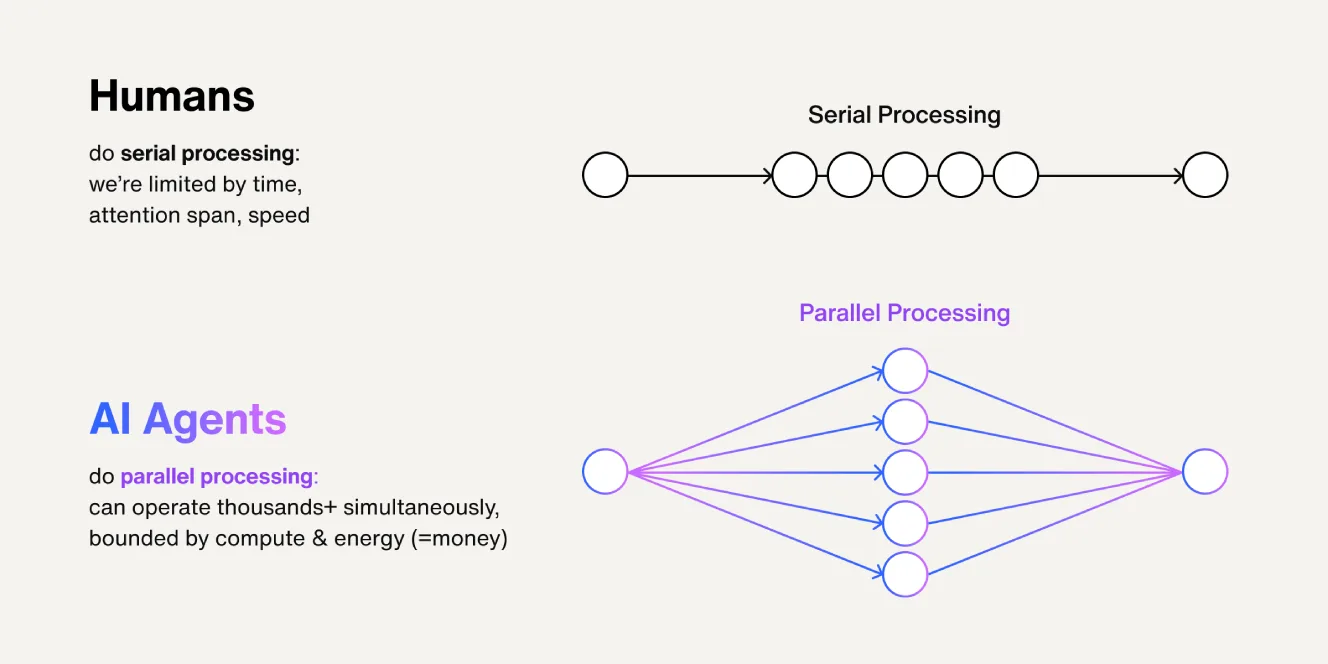
Quantify the reduction in manual labor hours and the cost of AI inference. Subtract the agent’s runtime costs (API calls, compute) from the labor costs it replaces. Include compliance and audit costs, as autonomous agents reduce human error but require robust monitoring infrastructure. This calculation forms the numerator in your ROI equation.
Many deployments fail because they ignore the "tail" costs: integration maintenance, model drift monitoring, and exception handling. Factor in the cost of human-in-the-loop review for edge cases. IBM research suggests that operational overhead can consume up to 30% of projected savings if not explicitly budgeted for during the validation phase.

Assign a monetary value to risk reduction. This includes avoided regulatory fines, reduced data breach exposure, and improved customer satisfaction scores. Google Cloud notes that enterprise AI value often lies in risk reduction rather than pure revenue generation. Quantify the cost of errors the agent prevented to capture this hidden ROI.
Deploy the agent in a controlled environment for 30–90 days. Compare actual performance against your baseline and projected savings. If the ROI falls short of your threshold (typically 20–30% in year one), adjust the scope or pause expansion. Use this data to refine your calculator inputs for future agents.
Use this calculator to project your net savings and ROI percentage. Adjust the inputs based on your pilot data to ensure your financial models reflect reality. This tool helps you communicate value to stakeholders by focusing on tangible financial outcomes rather than technical features.
Common Questions on Agent Pricing
Enterprise leaders often treat agent pricing as a fixed line item, but autonomous loops introduce variable costs that can spiral quickly. Unlike static API calls, agents execute multi-step reasoning chains, meaning a single user request may trigger dozens of token transactions. Understanding these mechanics is essential for accurate budgeting and risk mitigation.
How do token costs affect autonomous agent loops?
Autonomous agents do not charge per interaction; they charge per token processed during reasoning steps. A simple query might involve multiple internal loops for retrieval, validation, and synthesis. Databricks notes that these multi-step processes can increase token consumption by 3x to 5x compared to standard chat interfaces. Your cost calculator should account for this multiplier to avoid underestimating operational expenses.
Are enterprise support fees included in base pricing?
Base platform fees rarely cover the compliance, security auditing, and dedicated support required for high-stakes deployments. IBM emphasizes that enterprise-grade agents require additional layers of governance, which often incur separate support tiers. These fees are not optional if you are handling sensitive financial or healthcare data. Budget for these overheads to ensure your agent remains compliant and available during peak loads.
What are the scaling limits and associated costs?
Scaling an agent from 100 to 10,000 concurrent users is not linear. Google Cloud data suggests that latency increases significantly as context windows grow, requiring more powerful (and expensive) GPU instances. You must model your scaling strategy around these hardware constraints. Use the calculator to simulate peak load scenarios, ensuring your infrastructure costs align with your expected revenue per agent interaction.
No comments yet. Be the first to share your thoughts!