
Why 2026 AI Agents Demand Precise Cost Modeling
The era of simple prompts is over. As Google Cloud notes in its 2026 AI agent trends report, organizations are witnessing an "agent leap" where AI orchestrates complex, end-to-end workflows semi-autonomously. This shift from experimental chatbots to autonomous, wallet-enabled agents changes the financial equation entirely. Agents no longer just answer questions; they execute transactions, update databases, and trigger external APIs. Each action incurs a direct operational cost, meaning expenses scale with action frequency, not just query volume.
LangChain’s State of Agent Engineering survey highlights that enterprises are now focused on deploying agents reliably and efficiently at scale. The implication is clear: without rigorous financial modeling, uncontrolled agent orchestration can lead to significant budget overruns. A single agent task involving ten API calls and two database writes costs far more than a single text generation request. This complexity requires a shift in how we view AI spend—not as a fixed license fee, but as a variable operational expense tied directly to business outcomes.
Precise cost modeling is no longer optional; it is a risk management imperative. Organizations must account for token usage, tool-calling overhead, and latency-related compute costs. By understanding these granular drivers, finance and engineering teams can build agents that deliver measurable ROI rather than hidden liabilities. The following calculator helps you model these real-world costs based on your specific workflow complexity.
Calculate your AI agent deployment costs
Estimating the financial exposure of an AI agent deployment requires separating routine compute from the hidden costs of orchestration and failure. Enterprise-grade agents do not operate in isolation; they rely on complex routing, tool-use APIs, and memory management that multiply token consumption.
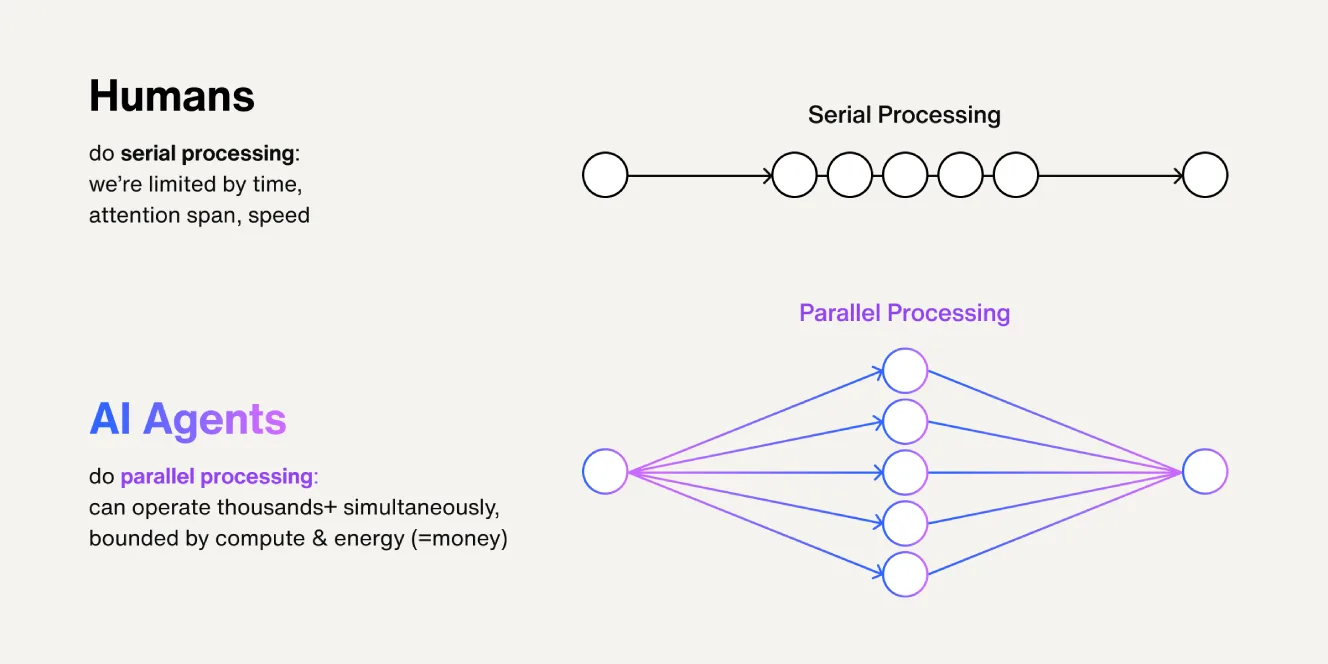
A single agent might appear cheap in isolation, but as you scale to dozens of specialized agents, orchestration overhead becomes the primary cost driver. Poorly designed agents often enter infinite loops or trigger redundant tool calls, inflating API bills by 40% or more. Understanding these variables is essential before committing to infrastructure.
Use the calculator below to model your specific monthly burn. Adjust the inputs to reflect your expected agent count, average API calls per session, and the complexity of your orchestration layer.
Note: This estimate covers direct API and compute costs. It does not include infrastructure, monitoring, or engineering salaries required to maintain agent reliability.
Compare top AI agent frameworks for 2026
Selecting the wrong orchestration layer is a direct liability. In 2026, enterprise ROI depends on matching framework capabilities to operational risk, not just feature lists. LangGraph, AutoGen, and CrewAI offer distinct tradeoffs in cost, autonomy, and enterprise support.
The following comparison isolates the financial and technical variables that determine total cost of ownership. Use this data to stress-test your procurement decisions against actual deployment scenarios.

| Framework | Cost Model | Autonomy Level | Enterprise Support | Primary Risk |
|---|---|---|---|---|
| LangGraph | Pay-per-token + infra | Stateful loops | High (LangChain) | Complex debugging |
| AutoGen (Microsoft) | Open source + infra | Multi-agent chat | Medium (Azure) | Hallucination chains |
| CrewAI | Open source + infra | Role-based tasks | Medium | State drift |
| LangChain | Pay-per-token + infra | Chained prompts | High (LangSmith) | Vendor lock-in |
Hidden costs in autonomous agent orchestration
The transition from pilot to production often reveals that the initial model cost is only the tip of the iceberg. Google Cloud’s 2026 agent trends report notes that the era of simple prompts is over, replaced by complex, semi-autonomous workflows that require significant infrastructure to manage [1]. While the headline cost might be the API call, the operational reality involves three major expense drivers: error handling, human-in-the-loop oversight, and security auditing.
Error handling and retry logic
Autonomous agents do not always execute perfectly. When an agent encounters an ambiguous instruction or a broken API endpoint, it must decide whether to retry, ask for clarification, or fail gracefully. Each retry consumes additional tokens and compute time. Without robust error-handling protocols, these "failed" attempts can silently inflate monthly bills. Finance teams must account for this "noise" cost, which can easily double the effective cost per successful transaction in early deployments.
Human-in-the-loop oversight
High-stakes decisions still require human approval. This oversight is not free; it requires engineering resources to build the interfaces and workflows that allow humans to intervene efficiently. If the agent’s confidence score is low, it must pause and wait for a human. This latency can slow down business processes, but more importantly, the engineering effort to build these "safety rails" is a significant upfront capital expenditure. The cost is not just in the human’s time, but in the system’s ability to present the right context for that decision.
Security auditing and compliance
As agents gain access to internal data and systems, the risk surface expands. Security auditing becomes a continuous process rather than a one-time check. This includes monitoring for prompt injection, data leakage, and unauthorized API calls. Organizations must invest in specialized monitoring tools and regular penetration testing. The cost of a single security breach involving an autonomous agent can far exceed the savings from automation, making this a non-negotiable line item in the ROI calculation.
[1] https://cloud.google.com/resources/content/ai-agent-trends-2026
Enterprise AI Agent Readiness Checklist
Before deploying autonomous agents, organizations must validate their infrastructure against strict operational and financial guardrails. Poor orchestration risks cascading failures and uncontrolled compute spend. Use this checklist to verify readiness across security, cost controls, and testing protocols.
Ensure agents operate with least-privilege access. Verify that API keys and authentication tokens are isolated per agent instance to prevent lateral movement in case of compromise. This is the first line of defense against data exfiltration.
Set hard limits on token usage and API calls per agent. Without these caps, a runaway loop or inefficient prompt can drain the budget in minutes. Monitor spend in real-time and trigger alerts when thresholds are breached.
Run chaos engineering tests to simulate failure modes. Verify that agents can gracefully handle API timeouts, invalid inputs, and downstream service outages without corrupting data or leaving processes in an ambiguous state.
Databricks notes that enterprise adoption hinges on these foundational controls. Skipping this checklist often leads to costly re-architecture after deployment failures. Treat this as a non-negotiable pre-launch requirement.
Frequently asked questions on AI agent costs and ROI
How do pricing models differ between simple chatbots and autonomous agents? Simple chatbots typically follow a per-user or per-message subscription model. Autonomous agents, however, operate on a consumption-based structure. You pay for the compute power required to orchestrate complex, end-to-end workflows semi-autonomously. This shift means costs scale with task complexity rather than headcount, requiring a different budgeting approach for enterprise finance teams.
What is the realistic timeline for achieving positive ROI on AI agents? Most organizations are moving past the experimental phase. As noted in LangChain’s 2026 State of Agent Engineering report, the focus has shifted to reliable deployment at scale. Real ROI typically emerges within 6 to 12 months as agents begin replacing manual handoffs in high-volume processes like customer support triage or data entry.
What are the hidden costs of poor agent orchestration? Inefficient orchestration leads to "token churn," where agents make redundant API calls or loop indefinitely on ambiguous tasks. This not only inflates compute bills but also introduces latency that degrades user experience. Proper monitoring and guardrails are essential to prevent these operational leaks from eroding projected savings.
No comments yet. Be the first to share your thoughts!