
AI agents 2026 budget
Pricing for autonomous agents in 2026 has shifted from flat enterprise contracts to modular consumption models. You are no longer buying a static software license; you are paying for compute, memory, and the successful completion of complex tasks. This change means your budget will fluctuate based on workflow volume and the sophistication of the models used.
Most providers offer a tiered structure. Entry-level agents using smaller, distilled models cost pennies per task. However, agents requiring reasoning across multiple steps—like those using OpenAI Operator or advanced Claude capabilities—require larger language model calls and more API tokens. Expect costs to scale linearly with task complexity, not just user count.
When planning your 2026 budget, account for three hidden costs: integration maintenance, human-in-the-loop oversight, and error correction. An agent that fails 5% of the time on complex tasks can cost more in manual remediation than a cheaper, simpler automation that requires minimal supervision. Build your budget around reliability, not just the headline price per call.
Compare the strongest AI agents 2026 options
The shift from simple prompt-response models to autonomous agents is reshaping enterprise workflows. In 2026, the leading tools are no longer just chatbots; they are semi-autonomous systems capable of orchestrating complex, end-to-end tasks with minimal human intervention. Choosing the right agent depends on your specific operational needs, whether that involves coding, customer service, or general business automation.
The following comparison highlights the most robust options available this year. We evaluate them based on autonomy level, primary use case, and integration depth. This data reflects current market capabilities as reported by industry testers and vendor documentation.
| Agent | Autonomy Level | Primary Use Case | Key Integration |
|---|---|---|---|
| OpenAI Operator | High | General web tasks | ChatGPT Plus |
| Anthropic Claude | Medium-High | Reasoning & coding | API & Desktop |
| Google Gemini | Medium | Multimodal analysis | Google Workspace |
| Microsoft Copilot | Medium | Enterprise productivity | Microsoft 365 |
| Devin (Cognition) | High | Software engineering | GitHub & GitLab |
OpenAI Operator stands out for its ability to execute multi-step web tasks, such as booking travel or managing reservations, directly through a browser interface. It represents a significant leap in general-purpose automation. Anthropic’s Claude remains the preferred choice for complex reasoning and code generation, offering deeper context windows and safer guardrails for enterprise data. Google’s Gemini leverages its multimodal capabilities to analyze documents, images, and video simultaneously, making it ideal for information-dense workflows. Microsoft Copilot integrates deeply into the 365 ecosystem, automating document drafting and meeting summaries within the tools employees already use. Finally, Devin continues to lead in specialized software engineering tasks, handling full development cycles from debugging to deployment.
When selecting an AI agent, prioritize the specific workflow you intend to automate. General-purpose agents like Operator are versatile but may lack the specialized depth of coding-focused tools like Devin. For enterprises already invested in Microsoft or Google suites, leveraging native agents like Copilot or Gemini often provides the smoothest integration path with lower friction. Always test these agents with your actual data sets to evaluate their accuracy and autonomy before full deployment.
Inspect the expensive parts
Autonomous agents are not just scripts; they are independent workers that spend your money as they work. When an agent loops, hallucinates, or misinterprets a goal, the bill escalates faster than in traditional automation. You need a practical inspection checklist to catch these expensive failure points before they drain your budget.

Track how many tokens each agent uses to complete a single unit of work. Agents often repeat context or re-read documents unnecessarily. Set hard limits on context window usage and monitor for "looping" behavior where the agent retries the same action without progress. If a simple query costs $0.50 in API fees, it is too expensive for high-volume tasks.

Ensure your agents have least-privilege access to your data and tools. An unchecked agent might accidentally delete records, send incorrect emails, or approve unauthorized transactions. Inspect the permissions scope of every tool the agent can call. Use sandbox environments for testing new agent behaviors before letting them touch production data.
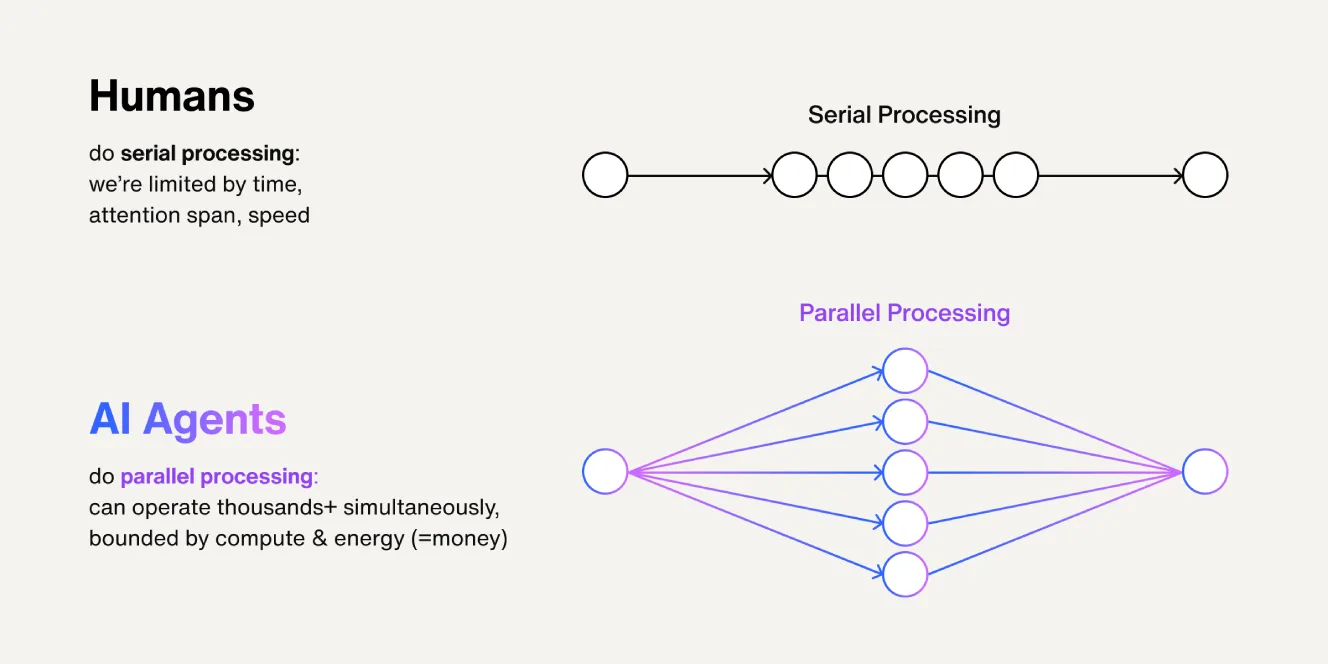
Agents fail. The cost lies in how they handle failure. Does the agent retry blindly, burning more tokens? Or does it escalate to a human? Inspect your fallback mechanisms. A high error rate with automatic retries is a budget killer. Implement circuit breakers that stop the agent after two failed attempts and alert a human operator.

Accuracy is a cost driver. Re-work caused by hallucinated data is expensive in labor hours. Regularly sample agent outputs and compare them against known ground truth. If an agent produces useful results 90% of the time, the 10% failure rate might still be cheaper than human labor, but you need to know the exact ratio to justify the spend.
By focusing on these four inspection points, you shift from fearing AI agent costs to managing them. Treat your agents like employees: monitor their efficiency, limit their access, and measure their output quality. This approach prevents the silent budget leaks that often accompany new AI implementations.
Ownership Costs Beyond the License
The sticker price of an AI agent is rarely the final bill. When you move from a prototype to production, the real costs emerge in maintenance, infrastructure, and the unexpected labor required to keep autonomous workflows running. A cheap subscription can quickly become expensive if the agent requires constant human oversight or generates errors that slow down operations.
The Hidden Maintenance Burden
Autonomous agents are not "set and forget" tools. They require continuous monitoring to ensure they adhere to changing business rules and data privacy standards. This means budgeting for engineering hours dedicated to debugging hallucinations, updating prompt libraries, and integrating with new API endpoints as vendors evolve their models. If an agent fails silently, the cost is not just the wasted compute time, but the downstream impact on customer service or supply chain delays.
When Cheap Stops Being Cheap
Low-cost agents often lack the robustness needed for complex enterprise tasks. They may struggle with multi-step reasoning or fail to integrate seamlessly with legacy systems, forcing your team to build expensive custom bridges. In contrast, higher-tier solutions often include better error handling, dedicated support, and more reliable API uptime. The tradeoff is clear: paying more upfront for a reliable agent reduces the long-term operational drag on your engineering and operations teams.
Calculating Total Cost of Ownership
To evaluate true value, look beyond the monthly fee. Factor in the cost of compute resources, which scales with usage, and the potential cost of errors. An agent that costs $500 a month but prevents two hours of manual data entry per day pays for itself quickly. Conversely, a free or low-cost agent that requires 10 hours of weekly supervision is a net loss. Always model the total cost of ownership, including labor, infrastructure, and risk mitigation, before committing to a vendor.
Ai agents 2026: what to check next
The enterprise AI landscape has shifted from simple chatbots to autonomous agents capable of executing multi-step workflows. As organizations move from testing to deployment, practical questions about capability, cost, and classification dominate the conversation. These answers address the most frequent objections and information gaps readers face when evaluating 2026 agent technologies.
Helpful gear
Use these product recommendations as a starting point, then choose the size, material, and price point that fit how you actually use the gear.



As an Amazon Associate, we may earn from qualifying purchases.
No comments yet. Be the first to share your thoughts!