
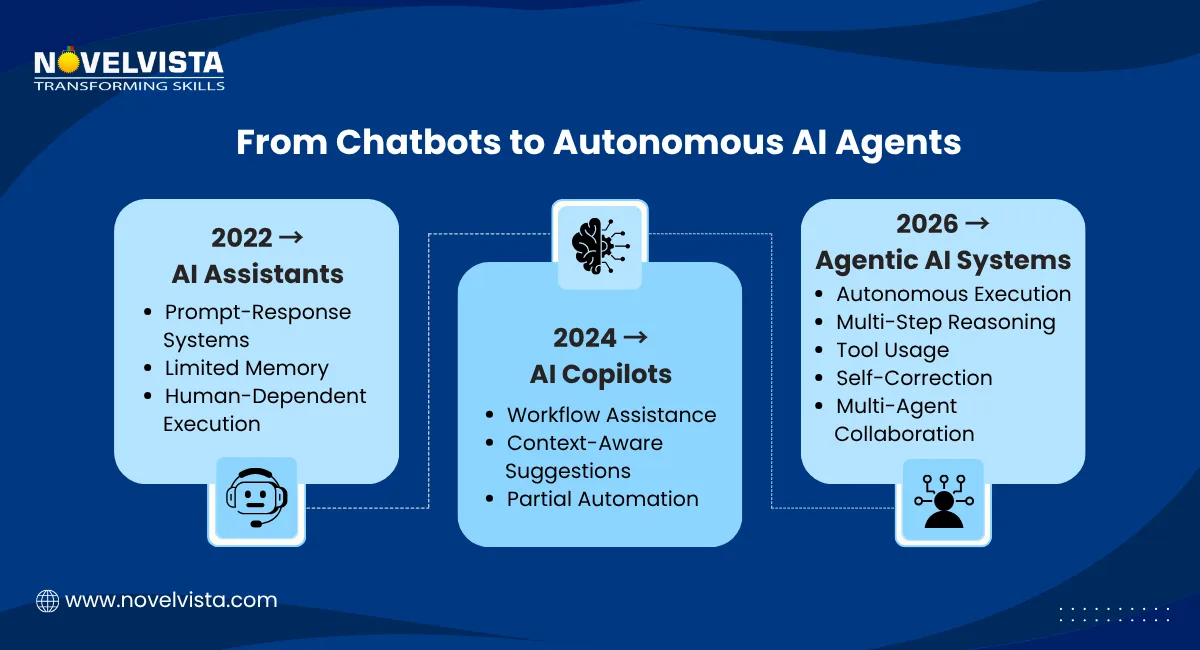
Autonomous AI agents
Autonomous AI agents are software systems designed to operate independently, processing data and making decisions without continuous human input. Unlike traditional tools that wait for commands, these agents understand goals, plan steps, and execute workflows across enterprise environments. They learn from feedback and adapt to changing conditions, reducing the need for manual oversight.
Selecting the right agent requires looking beyond marketing claims. We evaluated each option based on three practical criteria: integration depth with existing enterprise stacks, transparency in decision-making, and measurable impact on workflow efficiency. This list focuses on agents that solve specific business problems rather than offering vague automation promises.
5 Autonomous AI Agents Transforming Enterprise Workflows in 2026
Autonomous AI agents are shifting from experimental pilots to core infrastructure in 2026, handling complex, multi-step enterprise workflows with minimal human oversight. This roundup evaluates five specific agents based on integration depth, error-handling capabilities, and measurable ROI, providing concrete tradeoffs to help teams select the right tool for their technical stack.
1. CrewAI multi-agent orchestration platform
CrewAI structures autonomous tasks into distinct roles, allowing specialized agents to collaborate on complex workflows. This framework simplifies the management of inter-agent communication, ensuring that each component contributes its specific expertise without overlap. It is ideal for enterprises needing structured, role-based automation that scales with operational complexity.

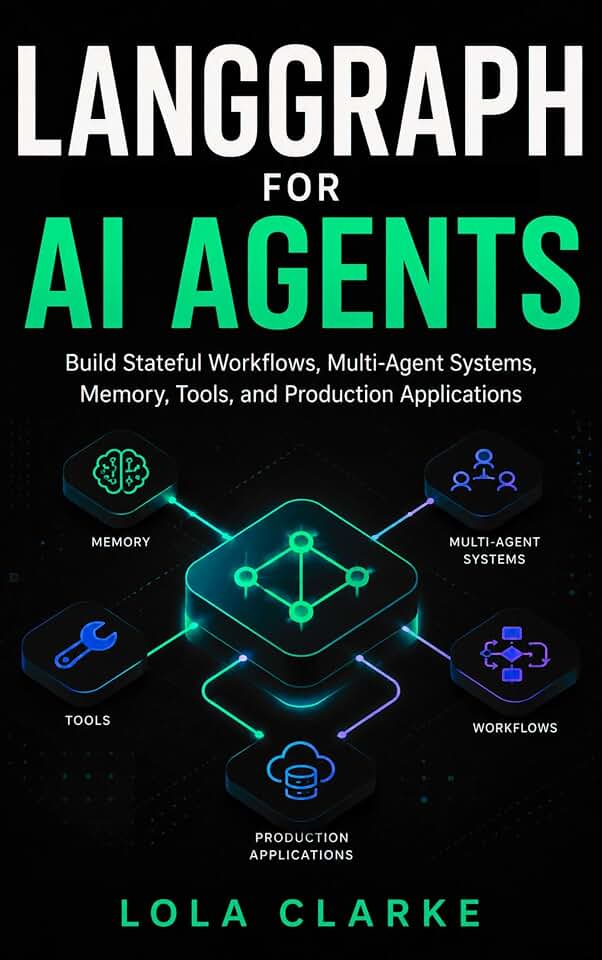
2. LangGraph stateful agent workflows
LangGraph introduces cyclic graphs to manage stateful interactions, enabling agents to retain context across multiple steps. This capability is crucial for long-running enterprise processes where memory and state consistency determine success. By visualizing workflows as graphs, teams can debug and optimize complex decision trees with precision.
3. AutoGen conversational coding agents
AutoGen enables multiple LLMs to converse and solve coding tasks autonomously. This conversational approach allows agents to self-correct code, review pull requests, and generate documentation without constant human intervention. It streamlines the development lifecycle by turning isolated coding prompts into collaborative, multi-agent problem-solving sessions.
4. Microsoft AutoGen Enterprise integration
Microsoft’s integration of AutoGen into enterprise ecosystems provides secure, compliant autonomous coding environments. This setup ensures that sensitive codebases remain within organizational boundaries while leveraging advanced multi-agent capabilities. It bridges the gap between open-source flexibility and enterprise-grade security requirements for large-scale software development.
5. Cognosys autonomous research agents
Cognosys specializes in autonomous research, gathering and synthesizing data from diverse sources without manual prompting. This agent type excels in market analysis and competitive intelligence, delivering comprehensive reports by continuously monitoring relevant information streams. It transforms raw data into actionable insights, reducing the time spent on manual research significantly.
How to choose the right autonomous AI agent
Picking an autonomous AI agent for 2026 is less about finding the smartest model and more about finding the one that fits your existing infrastructure. Autonomous agents operate independently, so the margin for error in integration is slim. You need a system that understands your data context without requiring constant manual oversight.
Start by mapping your workflow bottlenecks. Identify which tasks require reasoning and which just need execution. An agent that can browse the web and write code serves a different purpose than one designed to route customer support tickets. Match the agent’s core capability to the specific problem you are trying to solve, rather than adopting a broad platform that tries to do everything poorly.
Evaluate integration depth
Your agent must speak the same language as your current tech stack. Check for native connectors to tools like Slack, Microsoft Teams, Salesforce, or your internal database. If an agent requires complex API middleware to function, the maintenance overhead will quickly outweigh the automation benefits. Look for agents that offer pre-built integrations or easy-to-use webhooks.
Assess autonomy and guardrails
True autonomy requires strict boundaries. Review the agent’s ability to self-correct and its error-handling protocols. Can it recognize when it is out of its depth and stop, or does it hallucinate confidently? Look for features like human-in-the-loop checkpoints for high-stakes actions. The best agents operate freely within defined parameters but escalate immediately when they encounter ambiguity.
Check data privacy and security
Enterprise workflows often involve sensitive proprietary data. Ensure the agent provider offers clear data governance policies. Does the agent retain your data for model training? Can it operate within a private cloud or on-premise environment? Compliance with standards like SOC 2 or HIPAA is often non-negotiable for enterprise adoption.
Review cost and scalability
Autonomous agents consume significant compute resources. Understand the pricing model: is it per-seat, per-task, or based on token usage? For high-volume workflows, token-based pricing can become unpredictable. Evaluate how the agent scales during peak loads. A solution that works for ten users may collapse under the weight of a thousand simultaneous requests.
| Criterion | What to Check | Why It Matters |
|---|---|---|
| Integration | Native connectors vs. custom APIs | Reduces maintenance overhead and setup time |
| Autonomy | Error handling and escalation rules | Prevents costly mistakes in production |
| Security | Data retention and compliance certs | Protects proprietary information from leaks |
| Cost | Pricing model (per task vs. token) | Ensures predictable budgeting at scale |


As an Amazon Associate, we may earn from qualifying purchases.
FAQs about autonomous AI agents
Who are the big 4 AI agents?
The "big four" typically refers to the leading enterprise platforms deploying autonomous agents at scale: Microsoft Copilot, Salesforce Agentforce, Google Gemini, and Amazon Q. These providers dominate the market because they embed agents directly into existing workflows—like email, CRM, and cloud infrastructure—rather than requiring separate installations. Their scale allows them to process vast amounts of organizational data, making them the default choice for large enterprises seeking integrated autonomy.
What are the four types of AI agents?
AI agents are generally categorized by their level of autonomy and interaction complexity. Simple reflex agents react to current inputs without memory. Model-based agents maintain internal state to track changes over time. Goal-based agents plan specific sequences of actions to achieve defined objectives. Finally, utility-based agents evaluate multiple possible outcomes to maximize a specific performance metric, such as cost savings or speed, making them the most advanced for complex enterprise tasks.
What is the best autonomous AI agent?
There is no single "best" agent; the right choice depends on your existing tech stack. If you rely heavily on Microsoft 365, Copilot offers the deepest integration for document and communication workflows. For sales and customer data, Salesforce Agentforce is the industry standard. For unstructured data analysis across clouds, Google’s Gemini agents provide strong reasoning capabilities. Evaluate based on which platform your team already uses and trusts.
What are the 7 kinds of AI agents?
Beyond the four main types, broader taxonomies include seven kinds based on functionality: conversational agents that handle dialogue, browsing agents that navigate web interfaces, gaming agents that play strategy games, coding agents that write and debug software, research agents that synthesize literature, creative agents that generate media, and autonomous robots that interact with the physical world. In enterprise settings, conversational, browsing, and coding agents are the most commonly deployed for workflow automation.
No comments yet. Be the first to share your thoughts!