
Ai agents 2026 limits to account for
The promise of autonomous agents in 2026 is seductive, but the reality is defined by strict constraints. While early hype suggested a future where AI handles all enterprise workflows, current implementations remain bounded by specific technical and operational limits. Understanding these constraints is essential for evaluating which agents actually deliver value versus those that simply add complexity.
The primary constraint is reliability. Unlike simple chatbots, agents must execute multi-step tasks across different systems. In 2026, the most effective agents, such as OpenAI Operator or Google Gemini Advanced, are designed for specific, well-defined scopes rather than broad, open-ended autonomy. They excel when the workflow has clear inputs and predictable outputs, but they struggle with ambiguous instructions or novel edge cases that require human judgment.
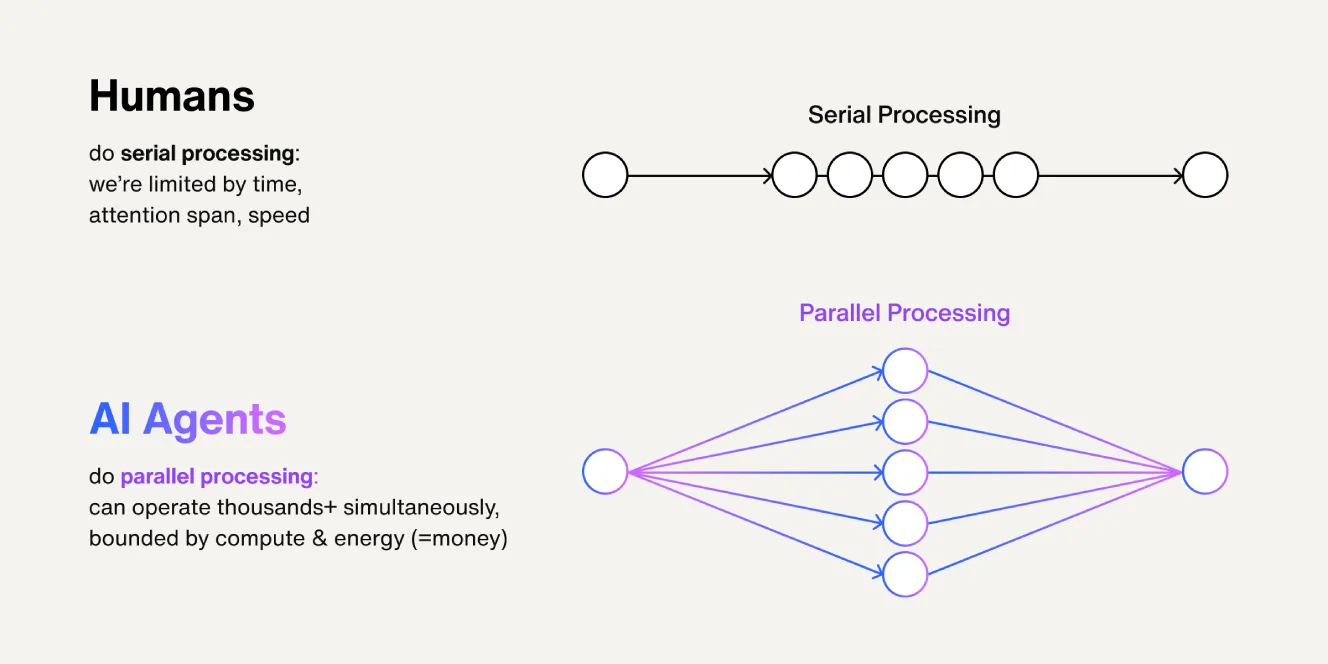
Another critical limit is cost and latency. Running autonomous agents requires significant computational resources, especially when they involve large language models making real-time decisions. For enterprise workflows, the trade-off between speed and accuracy is stark. Agents that are too slow fail to provide a competitive advantage, while those that are too fast may hallucinate or make errors that require manual correction, negating any efficiency gains.
Finally, integration constraints remain a major hurdle. Agents must seamlessly connect with existing enterprise software, which often involves legacy systems with limited APIs. Successful 2026 implementations prioritize agents that can work within existing digital ecosystems rather than requiring a complete overhaul of infrastructure. This means evaluating agents based on their ability to integrate with tools like Microsoft 365, Salesforce, or Slack, rather than their raw intelligence alone.
Choosing the right ai agent choices that change the plan
Selecting an autonomous agent for enterprise workflows requires balancing capability against cost and control. In 2026, the market has shifted from simple prompt-based assistants to complex, multi-step orchestrators. This evolution introduces new variables: latency, data privacy, and the risk of "agent drift" where autonomous actions diverge from intended outcomes.
The primary decision point is autonomy level. High-autonomy agents can execute end-to-end tasks but require rigorous guardrails. Lower-autonomy agents act as co-pilots, offering more human oversight but less efficiency. Your choice depends on the sensitivity of the data and the criticality of the workflow.
| Feature | High Autonomy | Co-Pilot Mode | Hybrid |
|---|---|---|---|
| Execution | Fully autonomous | Human-in-the-loop | Conditional autonomy |
| Latency | Higher (complex reasoning) | Lower (direct actions) | Variable |
| Risk | Higher (drift potential) | Lower | Moderate |
| Cost | Premium per task | Lower per session | Tiered pricing |
Estimating total cost of ownership
Autonomous agents often appear cheaper per task than human labor, but hidden costs accumulate through API calls, error correction, and infrastructure scaling. Use this calculator to estimate your monthly spend based on expected task volume and agent type.
These figures represent direct operational costs. They do not include development time, integration complexity, or ongoing monitoring. High-autonomy agents may reduce labor costs but increase infrastructure and oversight expenses. Always model worst-case scenarios where error rates spike due to unexpected edge cases.
Choose the next step
The AI Agent Economy works best as a clear sequence: define the constraint, compare the realistic options, test the tradeoff, and choose the path with the fewest hidden costs. That order keeps the advice usable instead of decorative. After each step, pause long enough to check whether the recommendation still fits the reader's actual situation. If it depends on perfect timing, unusual access, or a best-case budget, include a simpler fallback.


Avoid the weak options
Use this section to make the The AI Agent Economy decision easier to compare in real life, not just on paper. Start with the reader's actual constraint, then separate must-have requirements from details that are merely nice to have. A practical choice should survive normal use, maintenance, timing, and budget. If a recommendation only works in an ideal situation, call that out plainly and give the reader a fallback path.
The simplest way to use this section is to write down the must-have criteria first, then compare each option against those criteria before weighing nice-to-have features.
Ai agents 2026: what to check next
As autonomous agents move from experimental pilots to core enterprise infrastructure, practical concerns about reliability and integration take precedence over feature lists. The following questions address the most common objections teams raise before committing to an agent-based workflow.
Understanding these limitations helps teams set realistic expectations for the 2026 agent economy.
No comments yet. Be the first to share your thoughts!