
What are autonomous AI agents?
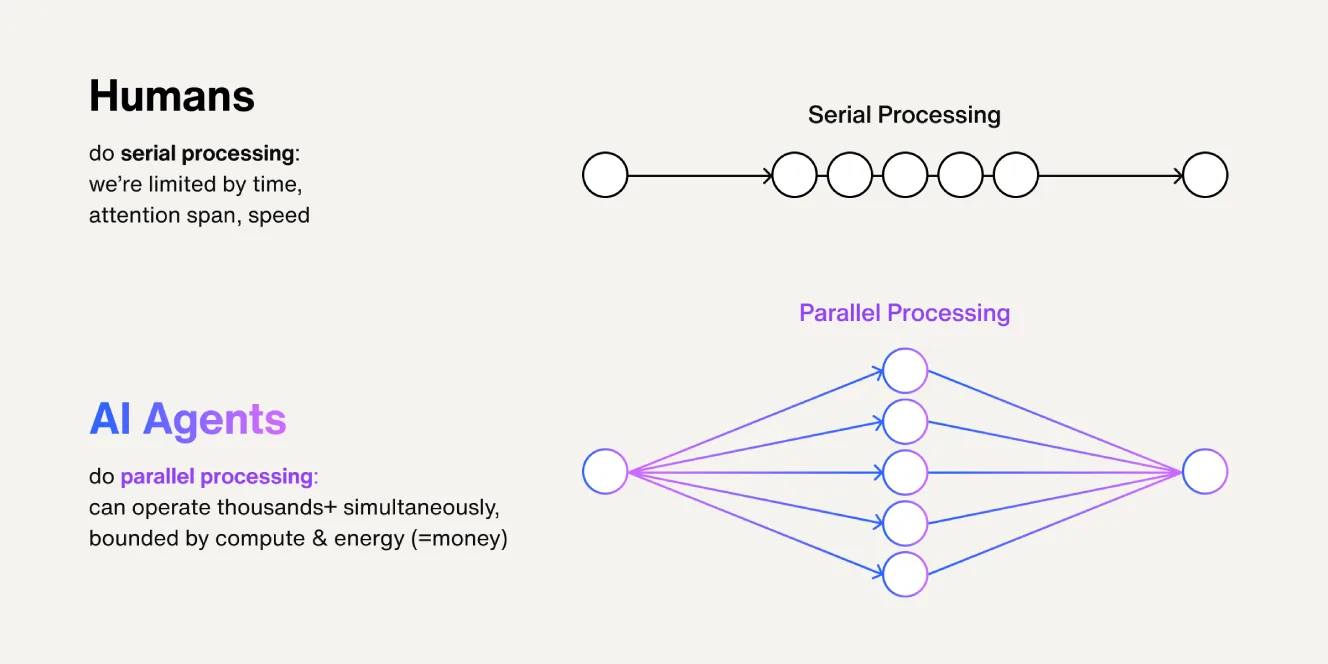
Autonomous AI agents are systems designed to execute complex workflows without continuous human supervision. Unlike standard chatbots that wait for a prompt, these agents perceive their environment, plan steps, and act on them to achieve a specific goal. They bridge the gap between simple automation and true intelligence by adapting to changes in real-time.
Microsoft defines them as tools that can continuously learn and make decisions independently. This capability allows enterprises to offload repetitive but cognitively demanding tasks, such as reconciling invoices or managing supply chain disruptions, to software that operates around the clock.
The four types of AI agents
Not all autonomous systems are built the same. Understanding the hierarchy helps determine which level of autonomy fits your operational risk profile.
- Simple reflex agents react to current perceptions without maintaining a history of past events. They are effective for immediate, rule-based triggers but lack strategic depth.
- Model-based agents maintain an internal state of the world, allowing them to handle partial observability. They remember context to make more informed decisions than simple reflexes.
- Goal-based agents use search and planning to achieve specific outcomes. They evaluate multiple potential actions to find the most efficient path to a defined target.
- Utility-based agents maximize a performance measure. They don't just reach a goal; they choose the best possible outcome based on value, preference, or cost efficiency.
Tradeoffs and decision framework
Adopting autonomous agents introduces a tradeoff between efficiency and control. High autonomy reduces labor costs and accelerates workflows, but it increases the risk of unexpected behavior if the agent's training data is misaligned with business rules.
For high-stakes finance or healthcare workflows, start with utility-based agents that have strict guardrails and human-in-the-loop verification. For lower-risk internal tasks, goal-based agents can operate with minimal oversight. The decision should hinge on how much deviation from standard procedure your organization can tolerate before intervention is required.
Autonomous ai agents choices that change the plan
Deploying autonomous agents requires balancing speed against control. Unlike simple chatbots that answer questions, autonomous agents execute multi-step workflows independently. This capability introduces distinct tradeoffs in cost, reliability, and security that vary by use case.
The decision to automate hinges on the complexity of the task. High-volume, repetitive processes often justify the higher initial setup and ongoing token costs. Conversely, tasks requiring nuanced judgment or handling sensitive data may still demand human oversight to prevent costly errors.
Use the calculator below to estimate the total cost of ownership, including implementation and operational expenses. Then, review the comparison table to see how different agent capabilities align with your specific operational risks.
| Factor | Speed & Scale | Cost Structure | Reliability | Security & Control |
|---|---|---|---|---|
| Simple Automation | High | Low | High for fixed rules | Low risk, limited scope |
| Complex Reasoning | Medium | High (compute-heavy) | Variable, may hallucinate | Medium risk, needs guardrails |
| Human-in-the-Loop | Low | Medium | High | High, full human oversight |
When to choose autonomy vs. assistance
For routine data entry or scheduling, full autonomy delivers immediate ROI. The system operates without friction, reducing labor costs significantly. However, the lack of real-time human intervention means errors can propagate quickly if the agent encounters an edge case it hasn't been trained to handle.
In contrast, human-in-the-loop agents are better for customer support or compliance-heavy workflows. They provide a safety net, allowing the AI to draft responses or actions while a human approves final execution. This approach reduces speed but ensures accuracy and regulatory compliance, making it ideal for high-stakes environments where mistakes are expensive.
How to Choose the Right Autonomous AI Agent
Autonomous AI agents are software systems that operate without human intervention to complete complex workflows. Unlike simple chatbots that answer questions, these agents can plan, execute, and adapt in real time. Choosing the right one requires matching the agent’s autonomy level to your risk tolerance and operational needs.
To evaluate your options, use this decision framework to move from abstract capabilities to concrete implementation.

Map the exact sequence of tasks. Determine if the workflow is linear (step A leads to B) or branching (multiple possible outcomes). Autonomous agents handle branching logic better than rule-based scripts. Limit the scope to one clear business outcome to measure success accurately.

Check if the agent can connect to your existing enterprise tools via API. Complex integrations often require custom middleware, which increases maintenance costs. Prioritize agents with pre-built connectors for your primary CRM, ERP, or data warehouse to reduce deployment time.
Decide how much control you want to retain. Some agents require human approval for every action, while others operate fully independently. For high-stakes financial or legal decisions, choose a semi-autonomous model that flags anomalies for review. Fully autonomous models are best for low-risk, high-volume tasks.

Look beyond subscription fees. Factor in the cost of token usage, error correction, and ongoing monitoring. A cheaper agent that generates frequent errors may cost more in labor hours than a premium, reliable alternative. Use a cost calculator to project expenses based on expected transaction volume.
Deploy the agent in a sandbox environment with a small, non-critical dataset. Measure accuracy, speed, and failure rates against your baseline. This step reveals edge cases that theoretical models miss and helps you refine the agent’s guardrails before full-scale rollout.
Spotting Weak Autonomous Agent Claims
Many enterprise vendors use "autonomous agent" as a marketing label for simple chatbots or scripted macros. True autonomous agents can plan, execute, and iterate without human intervention, but most "autonomous" tools still require constant human oversight. This distinction matters for risk management and budget allocation.
The "Hands-Off" Myth
Claims of fully autonomous workflows often hide significant caveats. A vendor might promise end-to-end automation, but the agent may fail silently on edge cases or require manual approval for any action over a certain threshold. Always ask for specific failure modes and approval workflows. If the solution cannot explain its reasoning or revert changes, it is not truly autonomous—it is just a risky automation script.
Vendor Lock-in and Integration Gaps
Some autonomous agents are tightly coupled to proprietary ecosystems, making them difficult to integrate with existing enterprise stacks. This creates hidden costs in data migration and workflow redesign. Check if the agent supports standard APIs or if it requires custom middleware. Open standards ensure you can swap vendors without rebuilding your entire operational backbone.
Decision Framework
Evaluate agents based on transparency, not just capability. Look for systems that provide audit logs, explainable decisions, and clear rollback mechanisms. If an agent cannot justify its actions in plain language, it is too risky for critical enterprise workflows. Prioritize tools that augment human judgment rather than replacing it entirely.
No comments yet. Be the first to share your thoughts!