
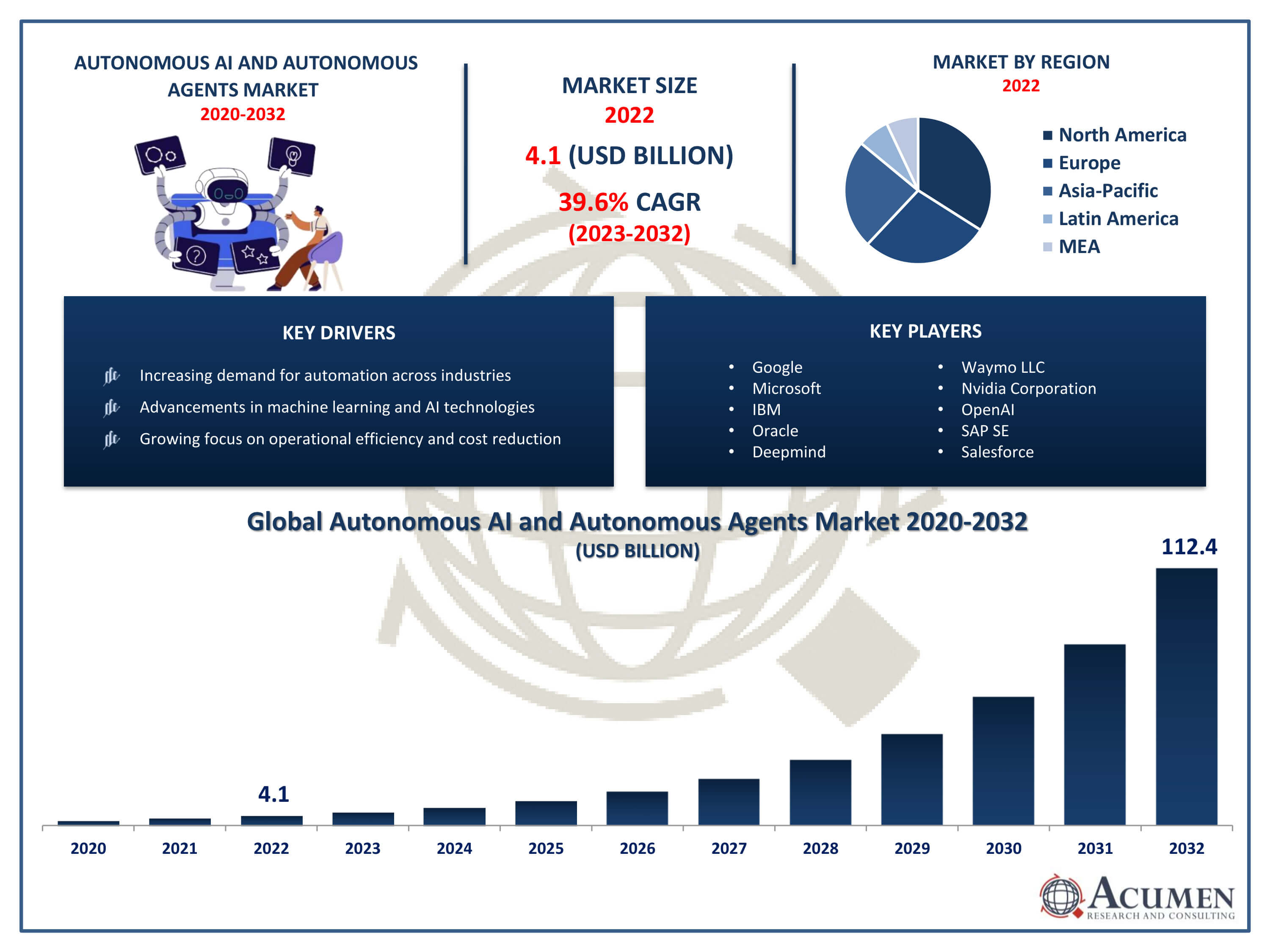
What autonomous agents do in 2026
The enterprise AI landscape has shifted from conversational interfaces to execution engines. In 2026, autonomous agents are no longer limited to answering questions or drafting text. They are systems that combine advanced intelligence with the ability to use external tools and take actions on your behalf. This distinction marks the transition from passive chatbots to proactive business ecosystems.
These agents operate by chaining multiple steps together. Instead of waiting for a user to click through a menu, an agent can receive a high-level goal, break it down into sub-tasks, and execute them across different software platforms. For example, an agent might monitor inventory levels, generate a purchase order, and notify the supplier—all without human intervention. This capability transforms AI from a productivity aid into a core operational component.
The value for enterprises lies in handling complex, multi-step workflows that were previously too tedious for human staff. By automating these sequences, companies reduce latency and error rates. The focus is no longer just on generating content, but on completing transactions and managing processes.
Top autonomous AI agent platforms
The shift from experimental prototypes to production-ready autonomous systems is accelerating. Enterprise leaders are no longer asking if AI agents can work, but which platforms can handle complex, multi-step workflows with reliability. The market is consolidating around a few robust frameworks that prioritize security, auditability, and measurable return on investment.
When evaluating enterprise-grade autonomous AI agents, the focus must remain on tools that offer granular control over agent behavior, robust error handling, and seamless integration with existing legacy systems. The following platforms represent the current standard for deploying agents that can make decisions and execute tasks without constant human oversight.
LangGraph
LangGraph, developed by LangChain, provides a structured approach to building multi-agent applications. Unlike standard linear chains, LangGraph allows developers to define cyclic graphs, enabling agents to loop, backtrack, and make conditional decisions based on intermediate results. This is critical for complex enterprise tasks where a single pass through an LLM is insufficient.
Its strength lies in its ability to maintain state across long-running conversations and workflows. For teams already using LangChain, LangGraph offers a natural evolution toward agentic autonomy, supporting features like human-in-the-loop verification and persistent memory. It is particularly well-suited for applications requiring rigorous state management and debugging capabilities.
AutoGen
Created by Microsoft, AutoGen specializes in multi-agent conversations. It allows developers to define conversable agents that can interact with each other and with humans to solve tasks. AutoGen is designed for scenarios where different agents have specialized roles, such as a coder, a reviewer, and a user proxy.
The framework excels in software development and technical problem-solving workflows. By enabling agents to critique and refine each other's outputs, AutoGen reduces the need for manual intervention. Its open-source nature and integration with Microsoft's broader AI ecosystem make it a strong choice for enterprises already invested in Azure and Microsoft 365.
CrewAI
CrewAI focuses on role-based agent collaboration. It allows users to define agents with specific roles, goals, and backstories, then assign them tasks within a "crew." This structure simplifies the orchestration of complex workflows by abstracting the underlying communication protocols between agents.
CrewAI is ideal for use cases that require distinct specializations, such as research, analysis, and content generation. Its high-level API makes it easier to prototype and deploy multi-agent systems quickly. The framework supports both sequential and hierarchical processes, allowing teams to choose the orchestration model that best fits their operational needs.
Microsoft AutoGen (Enterprise Edition)
For organizations requiring enterprise-grade security and support, Microsoft offers enhanced versions of its AutoGen framework. These solutions often include additional guardrails, compliance features, and integration with Microsoft Graph for accessing corporate data securely.
This version is designed for large-scale deployment where data privacy and regulatory compliance are paramount. It provides the same multi-agent capabilities as the open-source version but with added layers of governance and monitoring. Enterprises can leverage these tools to automate complex business processes while maintaining strict control over data access and agent behavior.


As an Amazon Associate, we may earn from qualifying purchases.
Comparing agent capabilities and costs
Choosing an enterprise AI agent platform requires looking past marketing claims to the actual mechanics of deployment and pricing. By 2026, the market has shifted from chasing "super agents" that attempt to do everything, toward specialized tools that stay in their lanes to ensure reliability and measurable ROI [[src-serp-5]]. The following comparison highlights how leading platforms differentiate themselves in terms of integration ease, core capabilities, and cost structures.
The table below contrasts the primary autonomous agent platforms recommended for enterprise use. These selections prioritize tools that offer robust API frameworks, clear pricing models, and proven integration with existing enterprise stacks like Salesforce, Slack, and SAP.
| Platform | Primary Focus | Integration Ease | Pricing Model |
|---|---|---|---|
| CrewAI | Multi-agent orchestration | High (Python/JS SDKs) | Open-source core, paid enterprise support |
| LangChain | LLM application framework | Very High (Broad library) | Usage-based + Cloud hosting |
| AutoGen | Conversational multi-agent | Medium (Microsoft ecosystem) | Open-source, Azure consumption |
| Microsoft Copilot Studio | Enterprise workflow automation | Native (Microsoft 365) | Per-user monthly license |
| Salesforce Agentforce | CRM-centric automation | Native (Salesforce Cloud) | Add-on per user/month |
When evaluating these options, consider your existing tech stack. Platforms like Microsoft Copilot Studio and Salesforce Agentforce offer the lowest friction for organizations already invested in those ecosystems, as they require minimal custom integration work. Conversely, open-source frameworks like CrewAI and LangChain provide greater flexibility for custom deployments but demand more engineering resources to maintain and scale.
Pricing models also vary significantly. Open-source solutions may appear cost-effective initially but often incur hidden costs in engineering time and infrastructure management. Cloud-native or SaaS-based platforms typically operate on per-user or consumption-based models, which can scale more predictably with usage but may become expensive at high volumes. Always request a detailed quote based on your projected agent concurrency and data volume before committing.
Implementing agents for measurable ROI
The shift from experimental prototypes to production-ready autonomous systems is no longer a question of if, but how. Industry analysts project the market will expand significantly, yet many enterprises stall because they chase "super agents" capable of doing everything. Success comes from designing agents that stay in their lanes, executing specific, high-volume workflows with precision.
To achieve tangible business results, you must prioritize governance and security from day one. An autonomous agent is only as reliable as its guardrails. Without strict access controls and audit trails, the risk of data leakage or operational drift outweighs the efficiency gains. Treat your AI infrastructure like a regulated workforce: define clear boundaries, monitor outputs, and ensure every action is traceable.
Start by identifying one repetitive, rule-heavy process—such as invoice processing or customer onboarding—and deploy a specialized agent there. Measure the reduction in manual hours against the cost of implementation. This focused approach allows you to refine the agent's behavior and security protocols before scaling to more complex, cross-departmental tasks.



As an Amazon Associate, we may earn from qualifying purchases.
Frequently asked questions about autonomous agents
Are autonomous AI agents secure enough for enterprise use? Security remains the primary hurdle for deployment. Unlike standard chatbots, autonomous agents execute actions and access sensitive data without constant human oversight. To mitigate risks, enterprises must implement strict guardrails, role-based access controls, and real-time monitoring to prevent hallucination-driven errors. Security is not an afterthought but a foundational requirement for any agentic workflow.
How do autonomous agents integrate with existing enterprise software? Most modern enterprise agents are designed to connect via APIs with legacy systems and cloud platforms. Tools like Microsoft Copilot Studio and Amazon Bedrock Agents offer pre-built connectors for common workflows. However, integration complexity varies; some platforms require significant custom coding to interface with proprietary databases, while others offer no-code setup for standard SaaS applications.
Can autonomous agents replace human workers? Current autonomous agents are designed to augment, not replace, human labor. They handle repetitive, high-volume tasks such as data entry, initial customer triage, and report generation. Human workers remain essential for strategic decision-making, complex problem-solving, and ethical oversight. The goal is to shift human effort from execution to supervision and exception handling.
How do you measure ROI for autonomous AI agents? Return on investment is typically calculated by measuring time saved and error reduction. Key metrics include the number of tasks automated per hour, reduction in operational costs, and improvement in customer response times. Gartner predicts that by 2028, 33% of enterprises will have deployed agentic AI, suggesting that ROI is becoming a standard benchmark for adoption.
No comments yet. Be the first to share your thoughts!