
Multi-agent systems 2026 budget
The shift from single-purpose AI tools to multi-agent orchestration changes how you spend. In 2026, you are no longer paying for isolated features; you are paying for coordination. This means your budget must account for the overhead of communication between agents, not just their individual processing power.
Expect to see tiered pricing based on complexity. A basic setup with two agents might cost less than two separate subscriptions, but adding a third or fourth agent often triggers exponential scaling in API calls. The orchestration layer itself, which manages the workflow, usually incurs a separate fee or requires significant engineering time to maintain.
| Feature | Single-Purpose Tool | Multi-Agent Orchestration |
|---|---|---|
| Cost Model | Per user/per tool | Per workflow/compute unit |
| Overhead | None | High (coordination latency) |
| Scalability | Linear | Exponential |
When evaluating vendors, look for transparent compute metrics. Avoid platforms that bundle orchestration into a flat fee without clear usage limits. The most cost-effective systems in 2026 are those that allow you to swap out individual agents without re-architecting the entire workflow, keeping your long-term operational expenses predictable.
Shortlist real options
Multi-agent orchestration is a structural change in how enterprise software operates. Instead of forcing one large language model to handle every task, these systems deploy several specialized agents that communicate in real-time. This architecture reduces hallucination rates and improves task completion by allowing each agent to focus on its specific domain, whether that's data retrieval, code generation, or customer service routing.
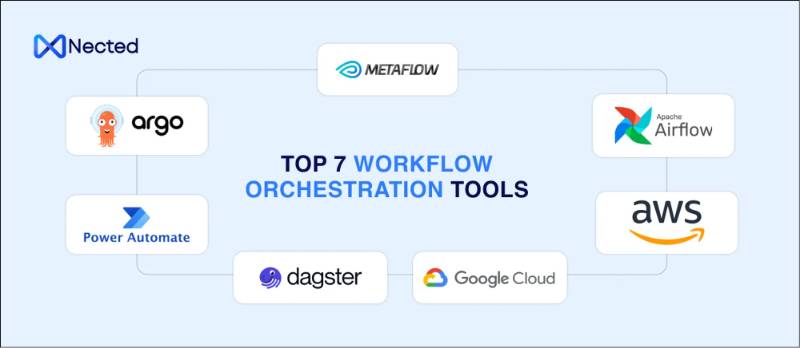
Below, we compare the strongest multi-agent orchestration platforms available in 2026. These options have moved beyond experimental prototypes to offer robust, production-ready frameworks that integrate with existing enterprise stacks. The comparison focuses on orchestration logic, integration depth, and scalability features that matter for actual deployment.
The choice between these platforms often comes down to your team's technical depth. If you have strong engineering resources, LangGraph and AutoGen offer the most flexibility for building custom, stateful workflows. LangGraph's cyclic graphs are particularly useful for tasks that require iteration and error correction, while AutoGen's conversational approach excels in coding and research scenarios where agents need to debate and refine outputs.
For organizations prioritizing speed and ease of use, CrewAI provides a more intuitive role-based structure that mimics human team dynamics. This is ideal for marketing, content creation, or data analysis pipelines where distinct roles (researcher, writer, editor) need to collaborate without deep coding knowledge. Meanwhile, Microsoft Copilot Studio remains the go-to for enterprises already invested in the Microsoft 365 ecosystem, allowing non-technical users to build agent workflows using a visual interface.
Finally, LangSmith isn't an orchestration engine itself but a critical companion tool. As multi-agent systems grow in complexity, debugging becomes difficult. LangSmith provides the observability needed to trace agent decisions, measure latency, and identify failure points across your entire orchestration layer. It is essential for any production environment where reliability is non-negotiable.
Community discussions in 2026 highlight a clear consensus: the future of AI is collaborative. Developers are increasingly moving away from monolithic prompts toward distributed agent networks that can handle context switching and specialized tasks more effectively than any single model.
Inspect the expensive parts
Multi-agent orchestration sounds efficient until a single misaligned agent causes a cascade of wasted compute or hallucinated outputs. Unlike single-purpose tools, where a failure is isolated, orchestration failures are systemic and costly. Before committing to an orchestration layer, audit these specific failure points.

Orchestration layers often create circular dependencies where Agent A waits for Agent B, which waits for Agent A. This results in infinite loops that drain API quotas. Verify your state machine has a strict timeout and a clear exit condition for every agent interaction.

Each agent in your chain adds its own context to the global state. If you have five agents, you may be sending five times the necessary tokens to the LLM. Check how your orchestrator manages context windows. You need a mechanism to summarize or discard old agent states, not just append them indefinitely.
In a single tool, a bad output is obvious. In orchestration, a bad output from Agent A becomes the input for Agent B, which then produces a confidently wrong answer. Inspect your error handling. Does the system stop on failure, or does it blindly push garbage data downstream? Hard stops are cheaper than fixing downstream errors.

Orchestration adds overhead. Calculate the cost of a single successful task, including the failed attempts and retries. If the orchestration layer increases your cost per task by more than 20% without improving accuracy, the complexity is not justified for that specific use case.

As an Amazon Associate, we may earn from qualifying purchases.
Ownership costs: when a cheap buy stops being cheap
The sticker price of a multi-agent orchestration platform is only the entry fee. The real cost lies in the ongoing maintenance, monitoring, and troubleshooting that single-purpose tools rarely demand. When one agent fails, the entire workflow can stall, requiring human intervention that quickly erodes your initial savings.
Hidden maintenance overhead
Multi-agent systems are complex. They require constant tuning of prompts, guardrails, and inter-agent communication protocols. Unlike a single tool that does one job well, an orchestration layer needs regular audits to ensure agents aren't drifting into hallucination loops or inefficient token usage. This technical debt is invisible until it hits your monthly cloud bill or your team's productivity.
The "cheap" tool trap
A low-cost orchestration solution might seem attractive initially, but it often lacks robust logging, debugging, and scalability features. As your use cases grow, you will find yourself paying more in engineering hours to build custom solutions for basic errors. A slightly more expensive platform with better observability tools can save thousands in developer time over a year.
When to reconsider
If your workflows are stable and simple, a single-purpose tool is likely more cost-effective. Switch to multi-agent orchestration only when your tasks are complex, require parallel processing, or involve multiple distinct AI capabilities that cannot be handled by one model alone. The cost justification comes from the complexity of the task, not the desire for novelty.


As an Amazon Associate, we may earn from qualifying purchases.
Multi-agent systems 2026: what to check next
As multi-agent orchestration moves from experimental research to enterprise deployment, practical questions about reliability, cost, and complexity naturally arise. This transition requires a different approach to system design and oversight.
Here are the most common questions readers ask before making a decision on multi-agent architectures.
No comments yet. Be the first to share your thoughts!