How to Integrate Coinbase Agentic Wallets into AI Agents for Autonomous Solana DeFi Swaps 2026
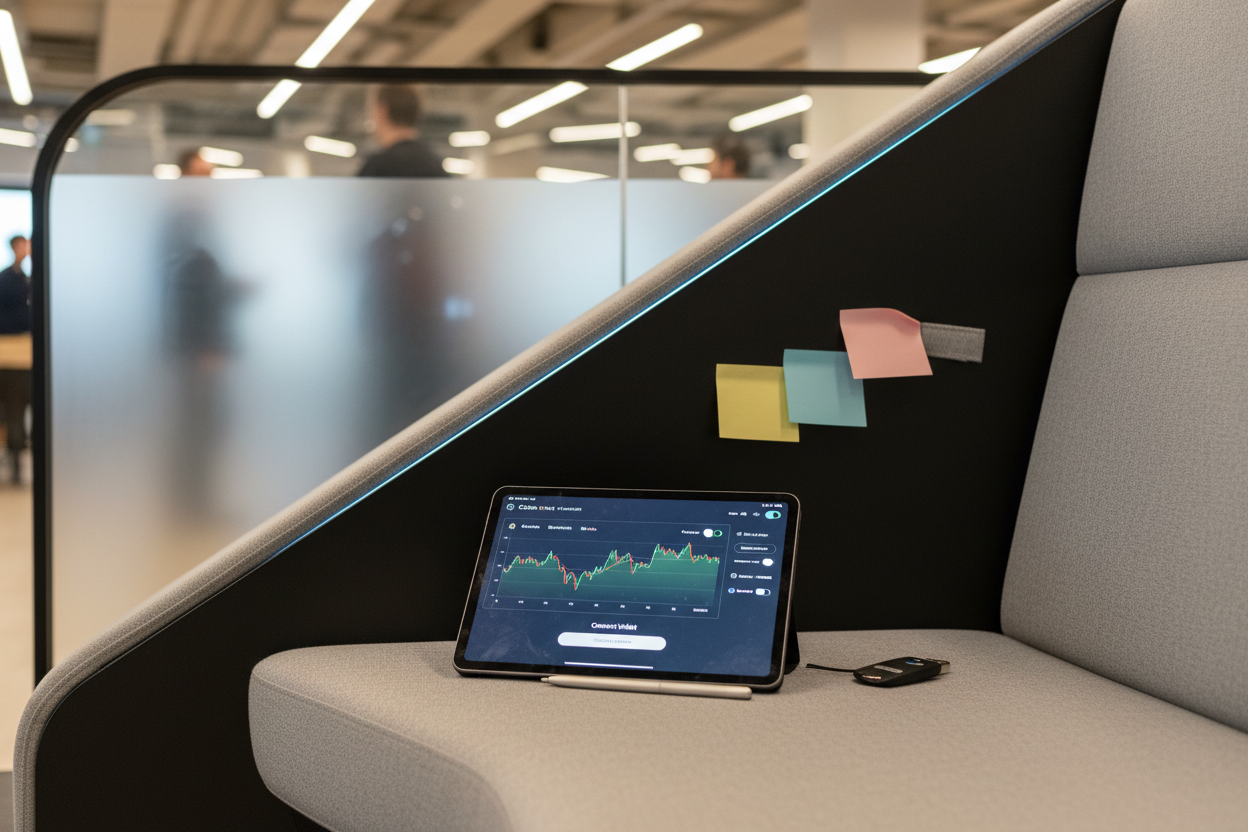
In 2026, as Binance-Peg SOL hovers at $80.04 after a 5.78% dip over the past 24 hours, developers are eyeing Coinbase Agentic Wallets to empower AI agents for seamless Solana DeFi swaps. This integration promises autonomy in volatile markets, but demands rigorous security protocols to mitigate risks like key exposure or unauthorized trades.

Coinbase’s Agentic Wallets, launched in February 2026, equip AI agents with standalone financial tools. They handle stablecoin holdings, token trades on Base, spending limits, and gasless operations. Yet, Solana integration requires bridging ecosystems, leveraging tools like the ‘awal’ CLI for wallet management and agent skills for authentication and funding. I view this as a double-edged sword: immense potential for AI agents Solana DeFi integration, tempered by the need for dual-key architectures and Trusted Execution Environments (TEEs).
Navigating Agentic Wallet Foundations for Cross-Chain Ambitions
Agentic Wallets shine in controlled environments, offering key isolation and spending guardrails that prevent rogue agent behavior. Picture an AI agent autonomously swapping SOL for USDC on Jupiter DEX amid market swings; that’s the vision. However, Base-centric design means Solana swaps hinge on custom adapters. Start by grasping the wallet’s core: it provisions authentication via Coinbase Developer Platform, telemetry for monitoring, and secure transaction signing. In my 14 years managing fixed income risks, I’ve learned that unchecked autonomy invites volatility amplification. Here, enforce owner-agent key splits, where the owner key vetoes excesses.
Solana (SOL) Price Prediction 2027-2032
Predictions factoring in Coinbase Agentic Wallets integration, AI agents for autonomous DeFi swaps, and Solana ecosystem growth from 2026 baseline of ~$80
| Year | Minimum Price | Average Price | Maximum Price | YoY % Change (Avg from Prior Year) |
|---|---|---|---|---|
| 2027 | $90 | $150 | $250 | +88% |
| 2028 | $120 | $220 | $400 | +47% |
| 2029 | $160 | $320 | $600 | +45% |
| 2030 | $220 | $480 | $950 | +50% |
| 2031 | $320 | $720 | $1,500 | +50% |
| 2032 | $450 | $1,100 | $2,300 | +53% |
Price Prediction Summary
Solana (SOL) is forecasted to experience robust growth from 2027-2032, propelled by Coinbase Agentic Wallets enabling AI agents for seamless Solana DeFi interactions. Average prices are projected to climb from $150 in 2027 to $1,100 by 2032 (CAGR ~48%), with minimums reflecting bearish cycles/regulatory risks and maximums capturing bullish AI/DeFi adoption surges. Baseline assumes continued market expansion post-2026.
Key Factors Affecting Solana Price
- Coinbase Agentic Wallets integration boosting AI agent autonomy on Solana DEXes
- Expansion of agentic AI token market cap (Solana leading at $4.2B+ in 2026)
- Security enhancements via TEEs, dual-key architecture, and spending guardrails
- Synergy with Base network trading and Solana’s high-throughput DeFi infrastructure
- Crypto market cycles, regulatory clarity, and competition from other L1s
- Increased DeFi TVL, transaction volume, and developer adoption via AgentKit/OpenAI SDK
Disclaimer: Cryptocurrency price predictions are speculative and based on current market analysis.
Actual prices may vary significantly due to market volatility, regulatory changes, and other factors.
Always do your own research before making investment decisions.
Market data underscores urgency. Solana’s $4.2 billion agentic AI token cap dwarfs others, signaling DeFi dominance. Coinbase’s app now embeds Solana DEXes, easing token trades. Still, developers must audit every permission; a single misstep could drain funds at $80.04 SOL levels.
Configuring Your AI Agent with AgentKit and OpenAI SDK
Begin integration via AgentKit, Coinbase’s toolkit for blockchain-interacting agents. It supports OpenAI’s Agents SDK out-of-the-box, letting you spin up agents that query prices, simulate swaps, and execute via wallets. Install the ‘awal’ CLI: npm install -g @coinbase/awal, then generate a wallet with awal wallet create --agent. Fund it securely, perhaps via stablecoin ramps, mindful of Solana’s low fees versus Base’s predictability.
Next, scaffold your agent. Use AgentKit to define skills: authentication links Coinbase OAuth; funding checks balances pre-swap; trading invokes Solana RPCs through proxies. For DeFi swaps, target protocols like Raydium or Orca, routing via Jupiter aggregator for optimal rates. Code snippet example:
This setup isolates agent actions within guardrails. Test in devnet first; simulate $80.04 SOL drops to stress limits. Opinion: Skip this, and you’re gambling institutional-grade tools on retail optimism.
Bridging Base to Solana: Dual-Key Security and TEE Implementation
Core challenge: Agentic Wallets optimize for Base, so Solana needs smart contract wallets. Deploy a dual-key Solana program-derived address (PDA): owner key for oversight, agent key for ops. Integrate TEEs via Alchemy’s stack for key isolation, ensuring agents sign without exposing privates.
| Component | Base Role | Solana Adaptation |
|---|---|---|
| Authentication | Coinbase OAuth | Proxy to Solana wallet |
| Trading | Gasless on Base | Jupiter API calls |
| Security | Spending limits | TEE-enforced PDAs |
Provision the agent key in a TEE, attest operations, then relay to Solana. This hedges against 24-hour lows like $77.20. As FRM-certified, I insist on quantitative risk models: backtest swap slippage at current $80.04 pricing.
Solana (SOL) Price Prediction 2027-2032
Bear, Base, and Bull case scenarios based on AI agent DeFi adoption and Coinbase Agentic Wallets integration
| Year | Minimum Price (Bear) | Average Price (Base) | Maximum Price (Bull) | YoY % Change (Base Case) |
|---|---|---|---|---|
| 2027 | $70 | $90 | $120 | +13% |
| 2028 | $95 | $125 | $170 | +39% |
| 2029 | $130 | $175 | $240 | +40% |
| 2030 | $190 | $250 | $340 | +43% |
| 2031 | $265 | $350 | $480 | +40% |
| 2032 | $360 | $480 | $650 | +37% |
Price Prediction Summary
Solana’s price is forecasted to grow significantly from 2027 to 2032, driven by autonomous AI agents using Coinbase Agentic Wallets for DeFi swaps. Starting from a 2026 baseline of ~$80, the base case average rises to $480 by 2032 (CAGR ~38%), with bear cases reflecting market downturns and bull cases capturing explosive adoption.
Key Factors Affecting Solana Price
- DeFi TVL growth via AI agent autonomous swaps
- Coinbase Agentic Wallets integration with Solana DEXs
- Solana’s scalability advantages for high-frequency AI transactions
- Regulatory clarity on AI-crypto interactions
- Crypto market cycles and Bitcoin halving effects
- Competition from Base and other L1s
- Technological upgrades like improved Firedancer consensus
- Macroeconomic trends and institutional inflows
Disclaimer: Cryptocurrency price predictions are speculative and based on current market analysis.
Actual prices may vary significantly due to market volatility, regulatory changes, and other factors.
Always do your own research before making investment decisions.
With bridges in place, your agent reads market data, computes swap paths, and executes autonomously. Caution prevails: monitor telemetry religiously, as Solana’s speed amplifies both gains and losses.
Execution demands precision. Your agent, now bridged, ingests real-time data via Solana RPCs, evaluates routes on Jupiter for minimal slippage at $80.04 SOL, then signs via the agent key. TEE attestation verifies intent before broadcast, curtailing impulse trades during dips to $77.20 lows. This isn’t mere automation; it’s engineered resilience against Solana’s high-velocity volatility.
Orchestrating the Swap: From Intent to Confirmation
Picture the workflow: agent detects arbitrage, say SOL to USDC amid a rebound from $77.20. It queries Jupiter API for quotes, simulates outcomes under stress, and if viable within limits, invokes the PDA. Owner key observes via telemetry dashboard, intervening only on anomalies. In fixed income trenches, I’ve hedged portfolios through worse swings; apply similar here with dynamic position sizing tied to 24-hour volatility metrics.
Real-world potency emerges in sustained ops. Agents could yield farm on Raydium, auto-compound at $80.04 entry points, outperforming passive holds if risks stay corralled. Yet, beware oracle manipulations or flash loan exploits; layer defenses with circuit breakers that halt at predefined drawdowns.
This snippet embodies caution: slippage guards at 0.5%, partial fills optional. Deploy iteratively, logging every tx hash for forensic review. My take? Autonomous AI trading wallets thrive on such granular controls, transforming speculation into strategy.
Live Deployment Risks and Monitoring in Production
Mainnet rollout? Triple-verify integrations. Solana’s throughput tempts overconfidence, but at $80.04 with -5.78% trailing, one errant swap cascades. Implement dashboards aggregating wallet telemetry, Jupiter fills, and SOL balances. Set alerts for deviations: if agent drift exceeds 2%, owner key freezes. Quantitative edge: Monte Carlo sims on historical data, projecting tail risks from recent highs at $84.97.

Give your agent the power of a wallet. Let your agent manage funds, hold identity, and transact onchain without human intervention. 🧵 https://t.co/Ns0SmSIys4
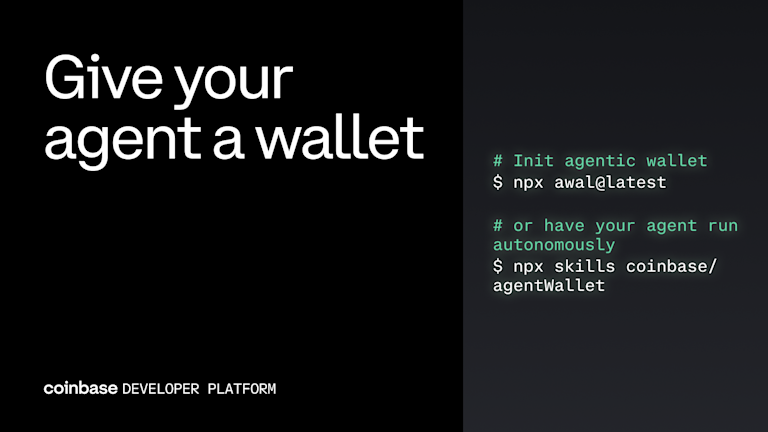
Community buzz validates the path; developers share wins, but failures too, underscoring secure crypto wallets for AI agents. Scale thoughtfully: start with micro-funds, graduate as conviction builds. TEEs and PDAs form the bedrock, yet human oversight lingers essential.
Forward gaze reveals acceleration. With Coinbase weaving Solana DEXes into its fabric, agentic flows could dominate DeFi volumes. Agents swapping at $80.04 today navigate tomorrow’s bull runs or corrections via baked-in adaptability. Developers prioritizing AI agent DeFi swaps tutorial 2026 protocols position for that era. Hedge boldly, monitor ceaselessly; in crypto’s wilds, this fusion of Coinbase Agentic Wallets and Solana unlocks guarded prosperity. Risk, tamed, fuels the ascent.