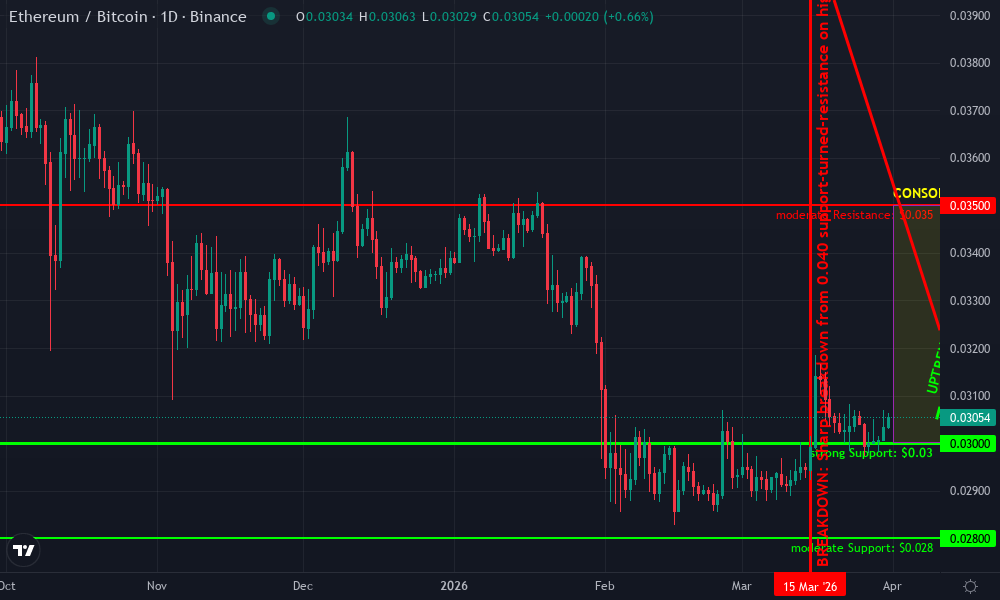
How to Integrate Self-Custody Wallets with AI Agents for Autonomous DeFi Swaps and DCA on 25+ Chains

Imagine waking up to a portfolio that’s already executed three smart DeFi swaps and layered in some dollar-cost averaging buys across Ethereum, Solana, and Base, all while you slept. That’s the reality AI agent self-custody wallets are unlocking right now, especially with tools like Trust Wallet’s new Agent Kit supporting swaps, transfers, DCA strategies, and limit orders on over 25 blockchains. No more manual bridging or watching charts; your AI handles it autonomously, keeping your keys firmly in your control.

Trust Wallet’s launch changes the game for autonomous DeFi wallet integration. Developers get two paths: hook AI to your existing self-custody wallet with user-set permissions, or spin up a dedicated agent wallet. Either way, self-custody stays intact, and your bot trades like a pro. I’ve seen similar automation in my swing trading days with equities, riding momentum for 3-10 day holds, but crypto’s volatility demands this level of speed and precision. Recent buzz from Yahoo Tech, Bitcoin Magazine, and Forbes highlights how this Bahrain-based wallet, backed by CZ, is paving the way for AI-driven wealth management.
Why Self-Custody Beats Custodial for AI-Driven Trades
Handing your keys to a third party? That’s so 2021. With AI agent crypto swaps DCA, self-custody ensures you retain ultimate control, even as agents execute complex strategies. Trust Wallet’s kit uses user-controlled permissions, so your AI can swap USDC to ETH on Arbitrum one minute and DCA into BTC on Bitcoin the next, without risking full access. Security shines through multi-party computation in projects like Self Chain’s AgentFi, which adds MPC-TSS for verifiable ops. Coinbase’s Agentic Wallets take it further with x402 protocol for machine payments and gasless trades on Base.
Think about DCA: instead of timing the market, your agent buys fixed amounts weekly, smoothing volatility. On 25 and chains, it scouts the best liquidity pools via intent-centric architecture, dodging high fees. Hybrid’s tie-up with Self Chain amps this up, letting agents parse your goals like “build a yield stack under 2% risk” and execute across DeFi protocols. No human fatigue, just relentless optimization.
Step-by-Step Trust Wallet AI Agent Setup for Beginners
Setting up Trust Wallet AI agent setup is straightforward, even if you’re new to dev work. Start by grabbing the Agent Kit from their docs. Install via npm: it’s a lightweight SDK that integrates with popular AI frameworks like LangChain or Auto-GPT.
- Fund your self-custody wallet and define agent permissions: swaps up to $1k daily, DCA on stables only.
- Connect the kit:
const agentWallet = new TrustAgentKit({ chainIds:Bitcoin/Ethereum Technical Analysis Chart
Analysis by Market Analyst | Symbol: BINANCE:ETHBTC | Interval: 1D | Drawings: 7
Technical Analysis Summary
As a balanced technical analyst, begin by drawing a primary downtrend line connecting the swing highs from early January 2026 around 0.062 to the recent lows in mid-April 2026 near 0.031, using the 'trend_line' tool with high confidence. Add a short-term uptrend line from the April low at 0.0305 to the recent green candle high at 0.0335 for potential bounce visualization. Mark key horizontal support at 0.030 (strong) and 0.028 (moderate) with 'horizontal_line', and resistance at 0.035 (moderate) and 0.040 (weak). Use 'rectangle' for the recent consolidation range from early April lows to highs. Place 'arrow_mark_down' on the MACD bearish crossover in March, and 'callout' on declining volume suggesting exhaustion. Add 'text' labels for S/R levels and fib retracement from major high to low for 38.2% and 50% levels around 0.042 and 0.046. Finally, 'vertical_line' at mid-March breakdown.
Risk Assessment: medium
Analysis: Overall bearish structure with downtrend intact, but signs of exhaustion (low volume, consolidation) introduce reversal risk; medium tolerance suits cautious positions.
Market Analyst's Recommendation: Monitor for breakout above 0.035 with volume; consider small long on support hold, avoid aggressive shorts without new lows.
Key Support & Resistance Levels
📈 Support Levels:
-
$0.03 - Strong support coinciding with recent lows and psychological level, multiple tests.
strong -
$0.028 - Moderate support from prior minor low in March.
moderate
📉 Resistance Levels:
-
$0.035 - Moderate resistance from recent consolidation highs and prior bounce level.
moderate -
$0.04 - Weak resistance aligning with 38.2% fib retracement of the major decline.
weak
Trading Zones (medium risk tolerance)
🎯 Entry Zones:
-
$0.032 - Bounce from strong support at 0.030 with green candle confirmation and low volume exhaustion, potential short-term long setup.
medium risk
🚪 Exit Zones:
-
$0.036 - Profit target near moderate resistance breakout.
💰 profit target -
$0.029 - Stop loss below strong support to limit downside.
🛡️ stop loss
Technical Indicators Analysis
📊 Volume Analysis:
Pattern: declining on downside moves with spikes on breakdowns, suggesting selling exhaustion in recent consolidation
Volume drying up during latest lows indicates weakening bear momentum, watch for pickup on upside.
📈 MACD Analysis:
Signal: bearish crossover in March with histogram contracting
MACD remains below zero line, but flattening hints at possible divergence for reversal.
Applied TradingView Drawing Utilities
This chart analysis utilizes the following professional drawing tools:
Trend LineHorizontal LineRectangleCalloutArrow Mark DownTextVertical LineDisclaimer: This technical analysis by Market Analyst is for educational purposes only and should not be considered as financial advice.
Trading involves risk, and you should always do your own research before making investment decisions.
Past performance does not guarantee future results. The analysis reflects the author's personal methodology and risk tolerance (medium).Building Your First Autonomous DeFi Swap Flow
Swaps are where the fun ramps up. Using the Agent Kit, craft a flow for instant execution. Picture this: market dips, your AI spots arb opportunities between Uniswap on ETH and Jupiter on Solana, swaps seamlessly via bridges. Code snippet wise, it's simple:
Permissions are key: granular controls mean your AI swaps aggressively during volatility but conserves during bears. Test on testnets first, then go live. Tools like ERC-8004 and EIP-7702 standardize this agent economy, making wallets self-identifying with reputation scores.
These standards turn agents into trusted players in the agentic economy, where bots build rep through on-chain history and execute trustless payments via x402. It's like giving your trading bot a LinkedIn profile, but for DeFi.
Set Up Autonomous Multi-Chain DCA with Trust Wallet & Self Chain AgentFi
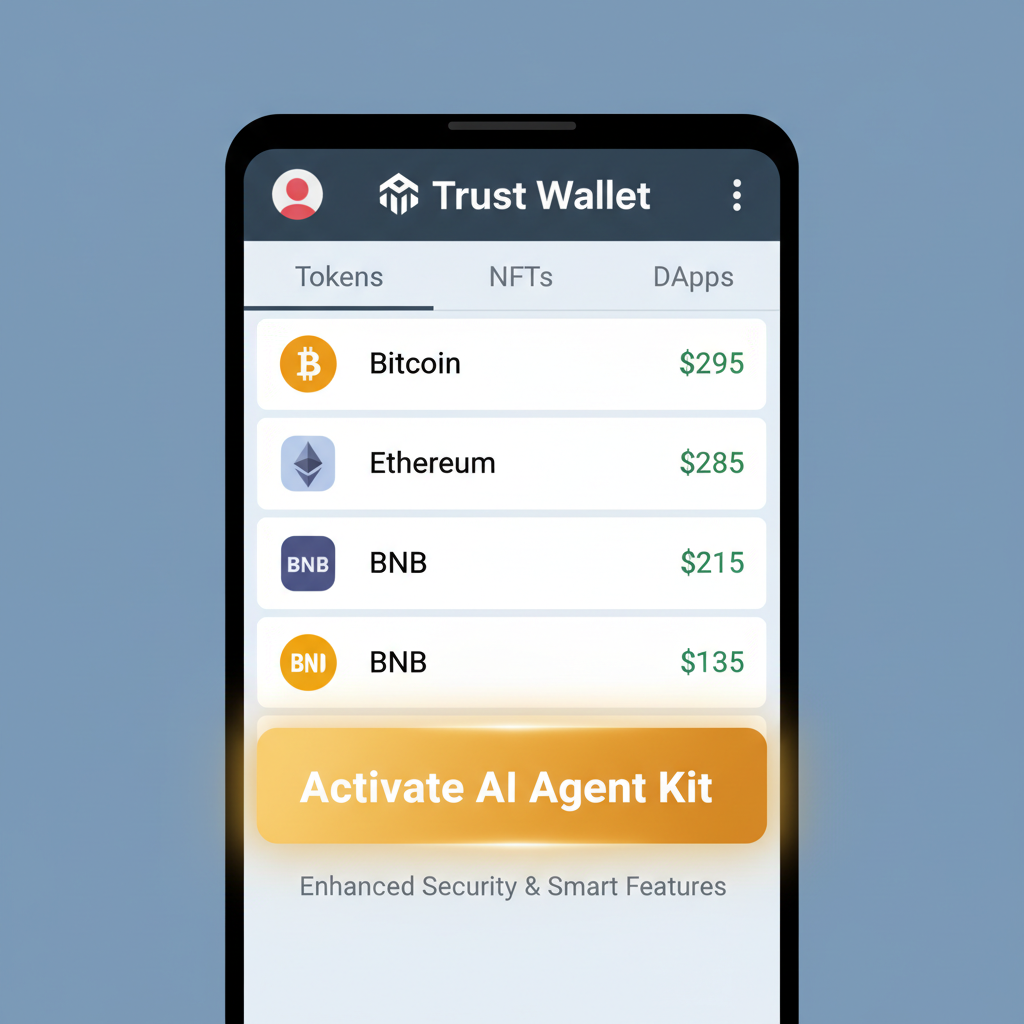 Install Trust Wallet & Activate Agent KitGrab Trust Wallet from your app store—it's your self-custody powerhouse. Create or import a wallet, then head to settings to enable the Agent Kit. This unlocks AI-driven trades across 25+ chains like ETH, Solana, and Base while keeping your keys safe.
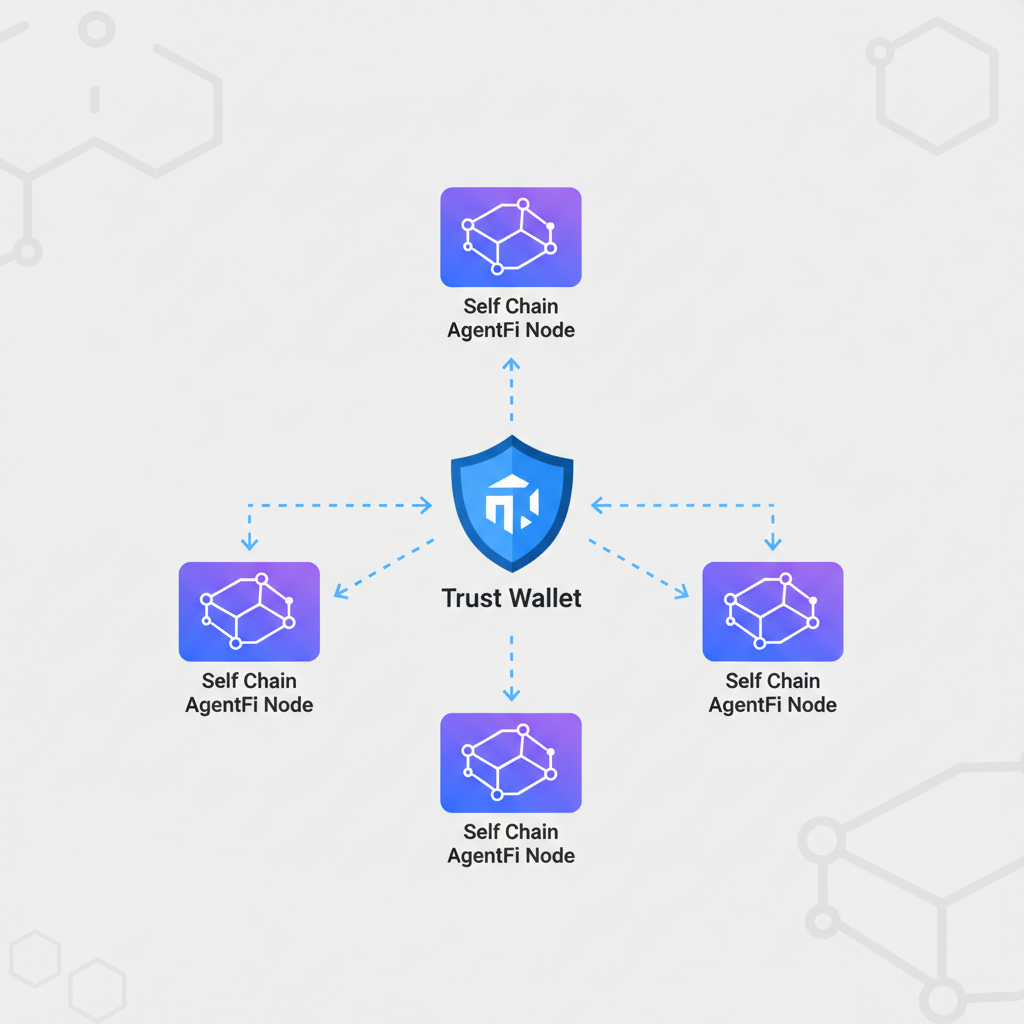 Link to Self Chain AgentFiVisit selfchain.xyz/agentfi and connect your Trust Wallet. Self Chain's AgentFi gives your AI agent an autonomous on-chain wallet with MPC-TSS security for seamless cross-chain ops. Approve the connection—your self-custody stays intact.
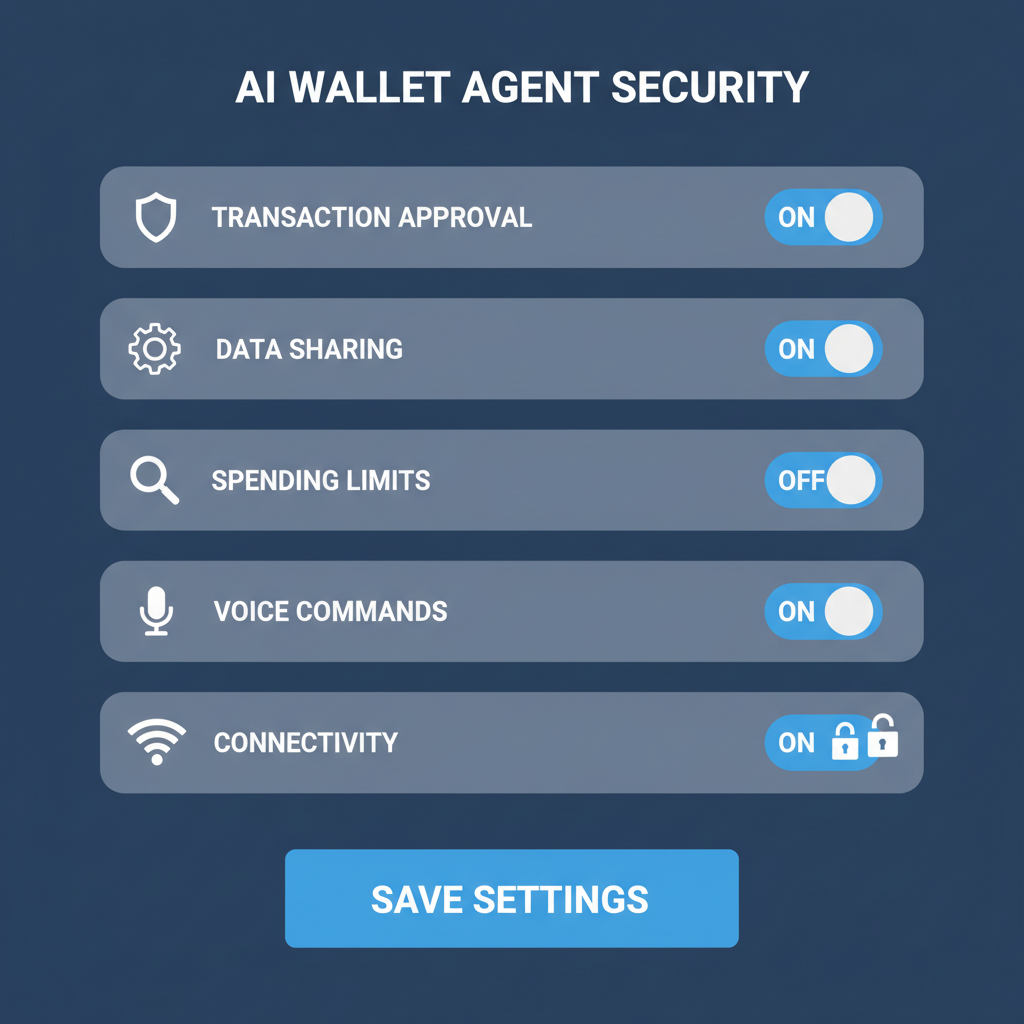 Configure Permissions & SecurityIn Agent Kit settings, set granular permissions: allow swaps, DCA, and transfers on ETH, Solana, Base. Use intent-based controls so the agent only acts on your predefined goals. Double-check MPC-TSS for verifiable security—no full access granted.
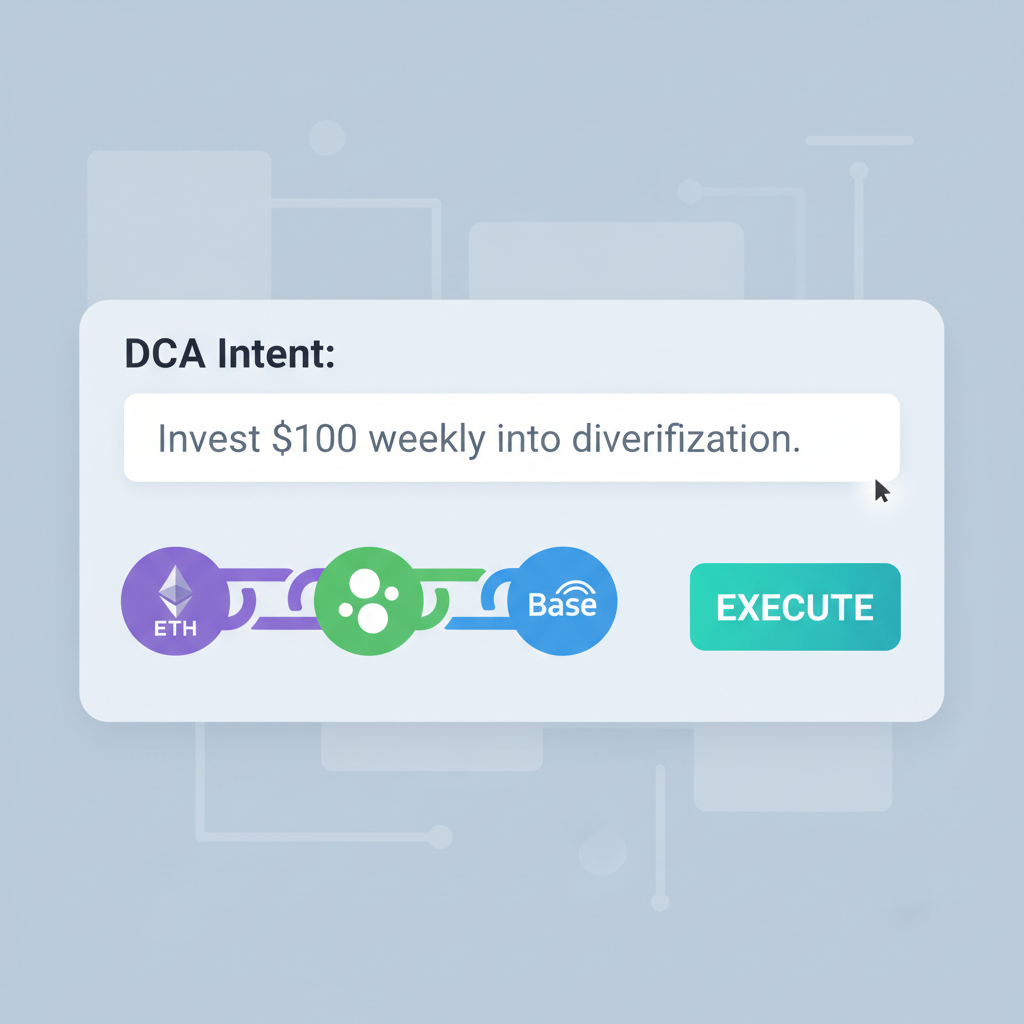 Define Your DCA IntentCraft your intent like: 'Execute weekly DCA of $100 into BTC/ETH on ETH, SOL/USDC on Solana, and ETH/USDC on Base.' Use natural language in the AgentFi interface—the intent-centric architecture parses it into optimal multi-chain strategies.
 Deploy the AI AgentHit deploy! Your agent springs to life, using Trust Wallet's kit for execution. It handles gasless trades where possible (like on Base), navigates solvers for best routes, and runs autonomously across chains.
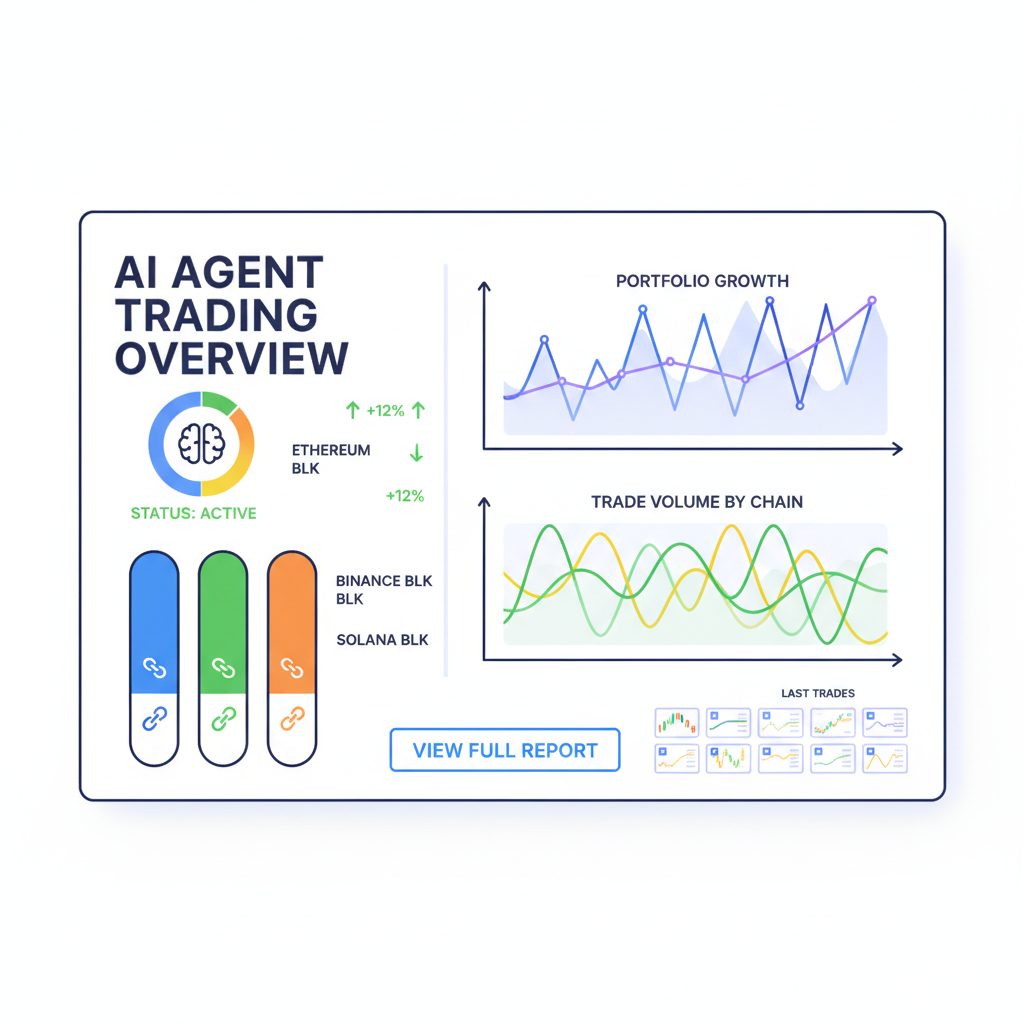 Monitor & Adjust PerformanceTrack executions in Trust Wallet's dashboard or Self Chain explorer. Review logs for swaps/DCA fills, tweak intents based on performance, and scale up. Your agent learns and optimizes over time.
Once your swap flow is humming, scale to multi-chain AI agent transactions. Trust Wallet's kit shines here, supporting 25 and chains out of the box. Agents can bridge assets via intents, hitting optimal routes without you micromanaging. I've swung traded equities long enough to know momentum shifts fast; in crypto, it's warp speed. Your AI spots a dip on Polygon, swaps stables for tokens, then flips to Arbitrum for yield, all self-custodied.
Optimizing DCA with AI: Smoothing Volatility Like a Pro
Dollar-cost averaging gets supercharged with autonomy. No more forgetting to buy the dip weekly. Set intents like "DCA $500 into BTC/ETH weekly if RSI under 40," and let the agent handle routing across chains for best prices. Self Chain's MPC-TSS keeps it secure, verifying every move without exposing keys. Hybrid's platform layers in goal parsing, so you say "accumulate blue chips under 1% drawdown risk, " and it builds the strategy, swapping via Jupiter or 1inch as needed.
Coinbase's Agentic Wallets add gasless magic on Base, perfect for frequent DCA without fee erosion. In practice, this mirrors my equity plays: ride waves but set stops. Agents enforce virtual stops, pausing if portfolio drops 5%. Recent integrations mean your bot stakes yields post-swap, compounding autonomously. Forbes nailed it; this is AI-assisted wealth management, but decentralized.
Security First: Guardrails for Wild AI Agents
Self-custody doesn't mean reckless. Build in layers: rate limits on swaps, whitelist approved protocols, and audit trails via on-chain events. Trust Wallet's permissions let you approve sessions, revoking if slippage exceeds 1%. Self Chain's threshold signatures split key control, so no single point fails. I've pulled trades on momentum fades; agents do it faster, selling into strength or pausing on news spikes parsed from feeds.
Edge cases? MEV protection via private mempools, flash loan defenses in code. Test with simulations: replay past volatility, like Solana's outages or ETH merges. Tools from Crypto. com Research highlight ERC-8004 for agent IDs, building trust scores that unlock better liquidity. It's practical evolution; start simple, iterate.
Comparison: Trust Wallet Agent Kit vs Self Chain AgentFi vs Coinbase Agentic Wallets
Feature Trust Wallet Agent Kit Self Chain AgentFi Coinbase Agentic Wallets Chain Support 25+ Chains ✅ Multi-Chain (Cross-Chain) Base-Focused Security User-Controlled Permissions & Self-Custody MPC-TSS Built-in Guardrails DCA/Swap Support Yes (Swaps, DCA, Limit Orders) Intent-Centric Gasless Trading Real-world wins stack up. Agents executed during last cycle's pumps, DCA-ing through bears while humans panicked. MRC GlobalPay's take on swap automation rings true: LLMs plus on-chain tools equal hands-free trading. My advice? Prototype one chain first, like Base for low fees, then expand. Monitor via dashboards, tweak prompts for better intents.
This tech isn't hype; it's deployable now. Trust Wallet leads with broad chains, but blend with Self Chain for modularity or Coinbase for Base yields. Your portfolio becomes a sleeping giant, swapping, DCA-ing, and optimizing while you ride real waves elsewhere. Set those stops, watch it compound, and reclaim your time. The agent economy is here, wallets first.
-
$0.03 - Strong support coinciding with recent lows and psychological level, multiple tests.