

In the evolving landscape of decentralized finance, integrating WalletConnect with AI agents unlocks unprecedented autonomy for Polygon DeFi swaps. Imagine AI-driven entities executing token exchanges without constant human oversight, leveraging Polygon's low-cost, high-speed network. This synergy, powered by WalletConnect's Smart Sessions, allows predefined rules and delegated permissions, transforming passive wallets into proactive participants in yield farming and arbitrage. Projects like SuperioAI and HeyElsa demonstrate this potential, enabling natural language commands to trigger multi-step, cross-chain actions while managing gas autonomously.
WalletConnect's Role in Securing AI Agent Autonomy
WalletConnect stands as an open protocol, distinct from any single wallet, designed to forge secure communication bridges between decentralized applications and user-controlled wallets. On Polygon, its integration simplifies connectivity, crucial for autonomous Polygon swaps. Traditional DeFi interactions demand manual approvals per transaction, creating friction that deters scalability. Smart Sessions change this dynamic: a single connection establishes session keys with granular permissions, letting AI agents propose and execute swaps within user-defined bounds.
This measured approach mitigates risks inherent in full delegation. I've long advocated for disciplined strategies in investing, and here, that translates to parameterized autonomy - AI agents bound by slippage tolerances, position sizes, and cooldown periods. Polygon Docs highlight WalletConnect's seamless fit within their Knowledge Layer, emphasizing bridge-less interactions that keep costs under a cent per swap. For developers eyeing polygon defi ai integration, this foundation eliminates QR code scans for every action, fostering true hands-off trading.
WalletConnect is an open protocol - not a wallet - built to create a communication link between dApps and wallets. (Polygon Docs)
Empowering AI Agents with WalletConnect Protocols
AI agents evolve from chatbots to sophisticated decision-makers when paired with WalletConnect. Tools like HeyElsa exemplify this, parsing intents like "swap USDC for optimal yield on Polygon" into routed transactions via aggregators such as 1inch or Jupiter. The protocol's client-side integration ensures wallets retain sovereignty; agents request signatures, but users approve the session rules upfront.

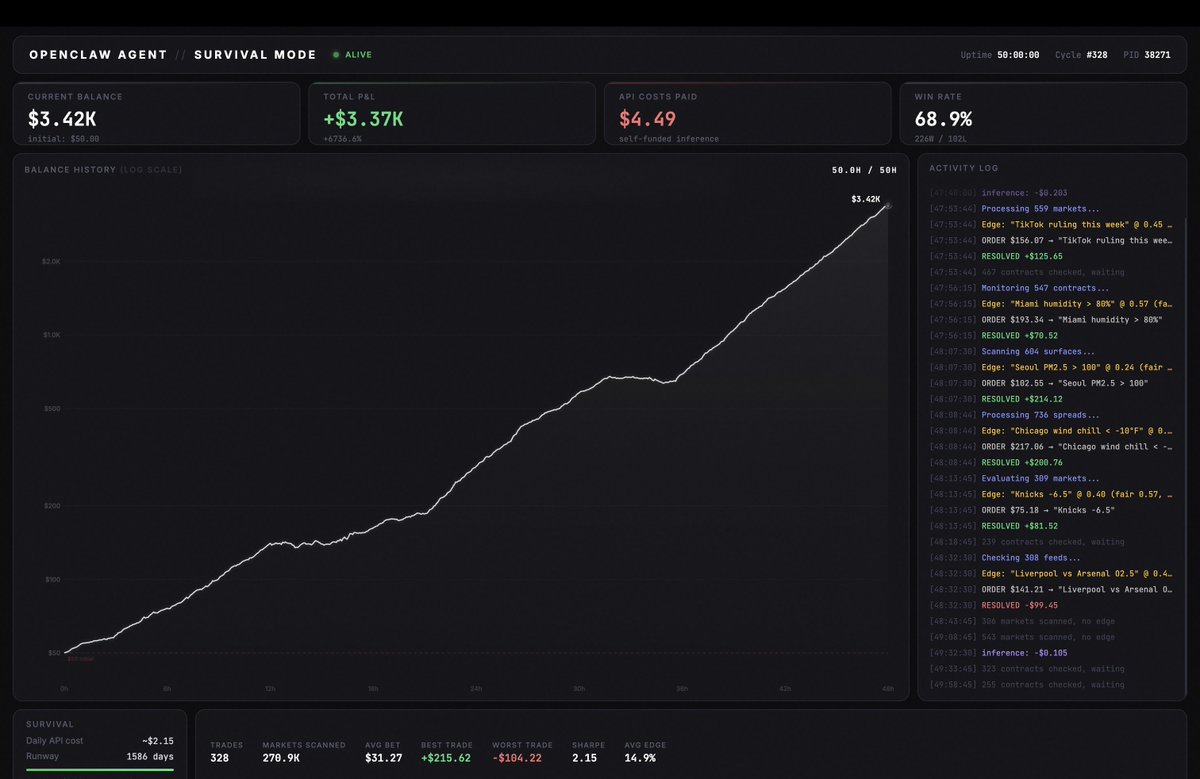
Consider the workflow: an AI agent monitors Polygon pools for arbitrage, identifies a MATIC-USDT opportunity, and via WalletConnect, prompts the wallet for execution. Moralis tutorials underscore secure authentication layers, blending WalletConnect with authentication providers to verify agent identities. This isn't speculative hype; it's a pragmatic evolution, reducing latency from minutes to seconds. My view? In a market prone to volatility, such integrations demand rigorous backtesting - simulate thousands of swaps to validate agent logic before live deployment.
SuperioAI pushes boundaries further, incorporating natural language processing for DeFi actions across chains, with Polygon as a prime venue due to its EVM compatibility and zkEVM upgrades. Developers must prioritize session namespaces, scoping permissions to swap methods only, averting overreach.
Initial Setup: Seamlessly Connect AI Agents to Polygon via WalletConnect
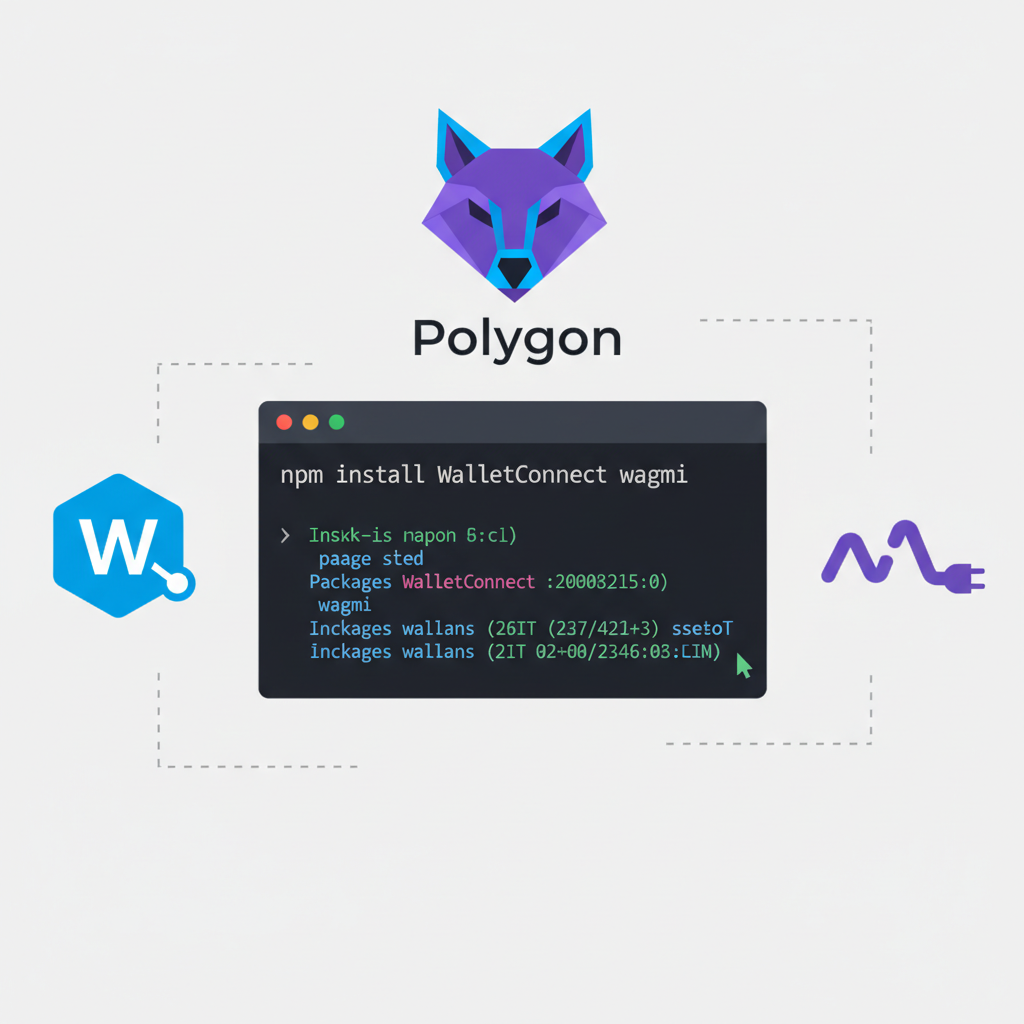
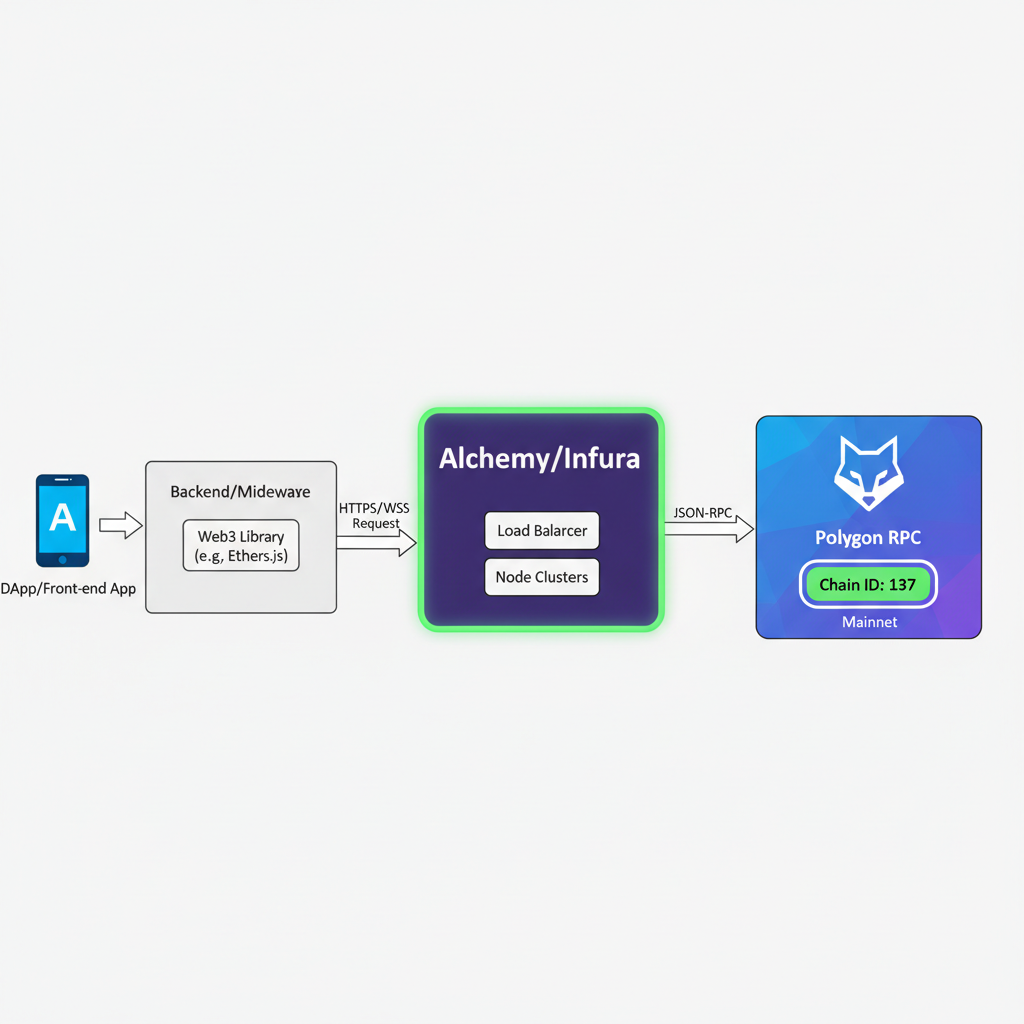
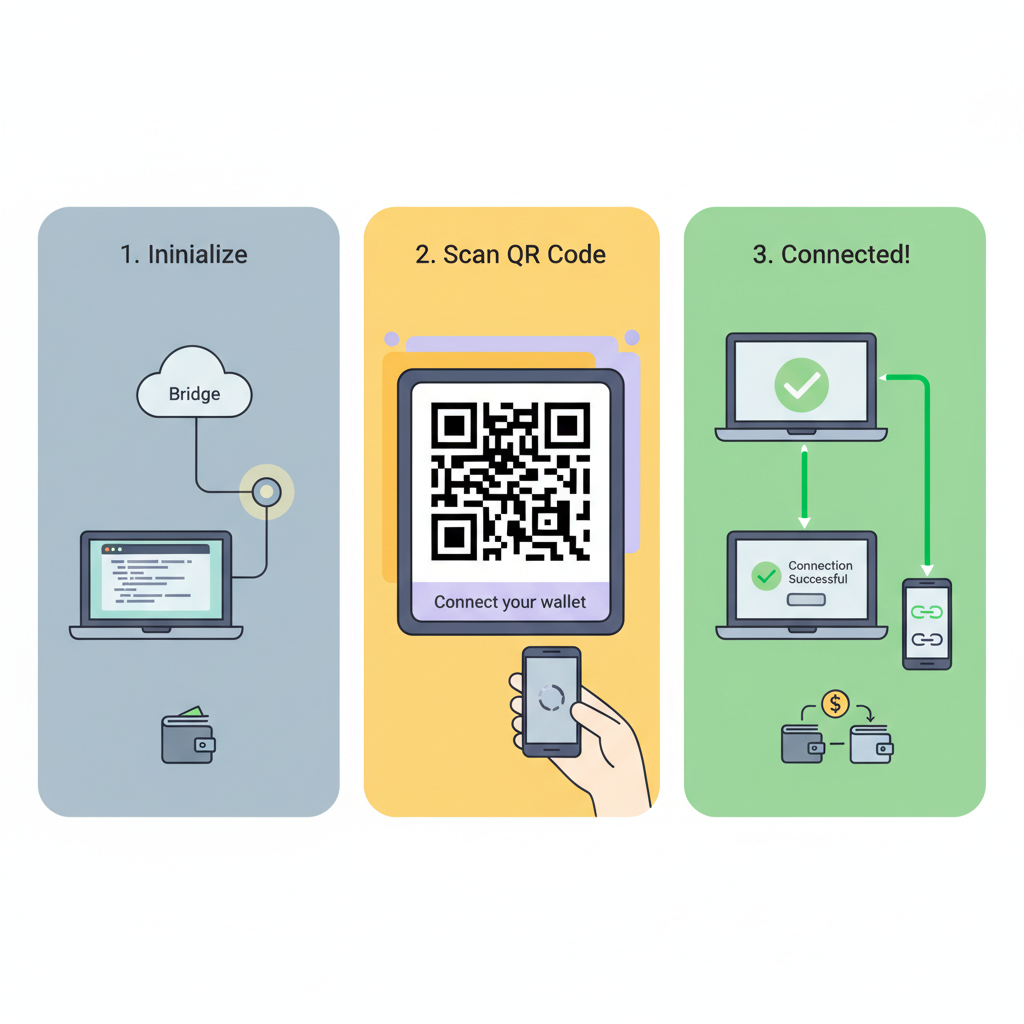

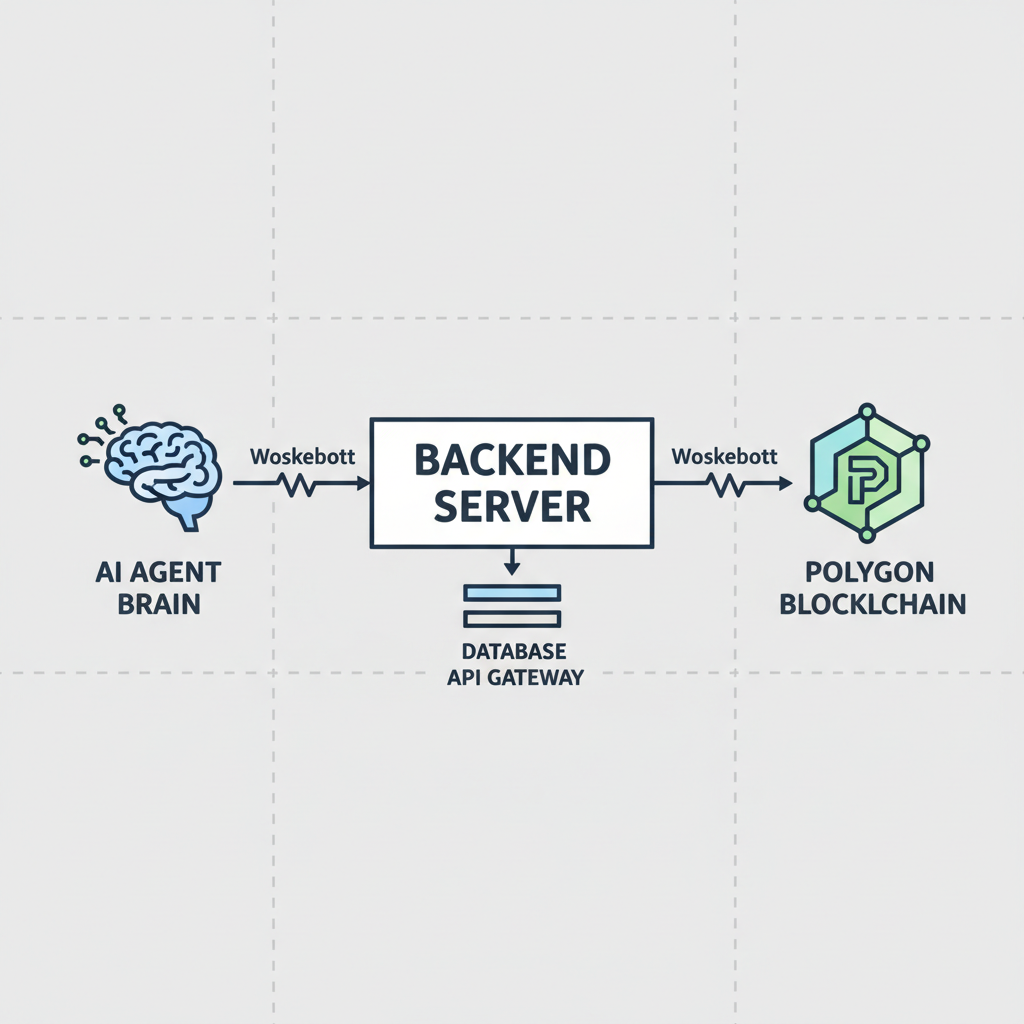
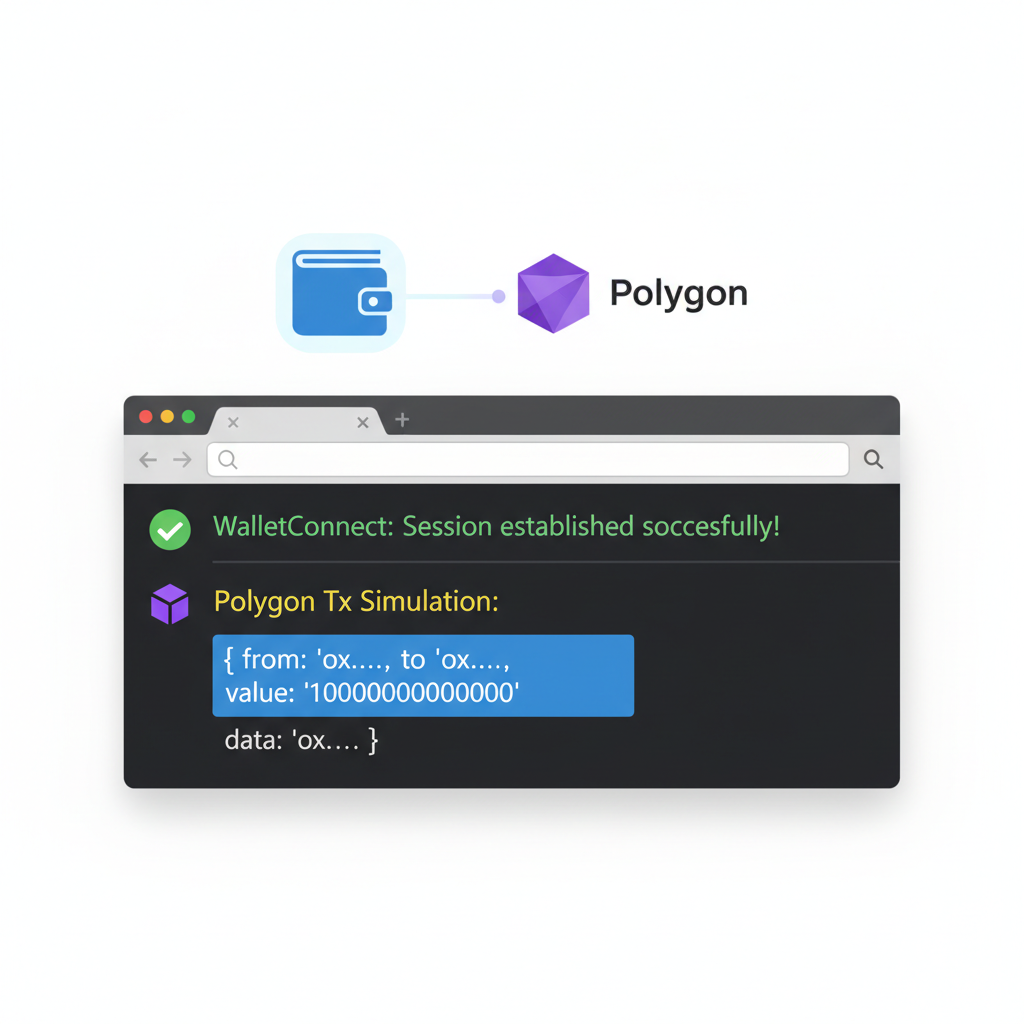
Post-connection, the AI agent subscribes to chain events, querying DEX APIs for liquidity. A simple threshold check - if price deviation exceeds 0.5%, initiate swap proposal. This setup, drawn from Netlify and Venly guides, ensures client-side resilience. Opinionated take: skip browser extensions for agents; opt for cloud wallets with WalletConnect support to enable 24/7 operation without local sessions dying.
Security remains paramount in secure AI DeFi trading. Implement rate limits and anomaly detection; if an agent proposes outsized swaps, flag for review. FORDEFI outlines the flow: DApp generates QR or deep link, wallet approves, session persists. For AI, automate this via headless mode where users pre-authorize via multi-sig.
Headless mode shines for walletconnect ai agents, where AI logic runs server-side, connecting via API keys tied to WalletConnect sessions. This setup sidesteps browser dependencies, ideal for autonomous operations monitoring Polygon's DEXs like QuickSwap or SushiSwap 24/7. Yet, discipline matters: enforce multi-signature approvals for high-value actions, mirroring portfolio safeguards against drawdowns.
Core Implementation: Executing Autonomous Polygon Swaps
Bridging theory to practice demands precise coding. With the initial connection established, AI agents leverage WalletConnect's wallet_sendTransaction method for swaps. Target Polygon's chain ID 137, routing through aggregators for optimal rates. Rain Infotech's 2025 guide stresses machine learning for strategy refinement - train models on historical Polygon data to predict slippage, then execute only on high-confidence signals.
AI Agent Arbitrage Monitoring and WalletConnect Swap Execution
The AI agent monitors the WMATIC-USDC Uniswap V3 pool on Polygon by polling the `slot0` state for the current price. This price is compared against a real-time 1inch aggregator quote for 1 WMATIC to USDC. An arbitrage opportunity is identified if the 1inch effective price exceeds the pool price by more than 0.5%. Upon detection, a swap transaction is constructed via the 1inch API with 0.3% slippage tolerance.
import { ethers } from 'ethers';
import axios from 'axios';

// Configuration
const POLYGON_RPC = 'https://polygon-rpc.com';
const WMATIC = '0x0d500B1d8E8eF31E21C99d1Db9A6444d3ADf1270';
const USDC = '0x2791Bca1f2de4661ED88A30C99A7a9449Aa84174';
const UNISWAP_V3_POOL = '0xA6dE2Ad071bE5F8F6bE7D307fC9e43C2e49C6B4f'; // WMATIC-USDC 0.3% pool
const INCH_API = 'https://api.1inch.io/v5.2/137'; // Polygon
const WALLET_ADDRESS = '0xYourWalletAddressHere';

// Ethers provider
const ethersProvider = new ethers.JsonRpcProvider(POLYGON_RPC);

const poolAbi = [
  'function slot0() external view returns (uint160 sqrtPriceX96, int24 tick, uint16 observationIndex, uint16 observationCardinality, uint16 observationCardinalityNext, uint8 feeProtocol, bool unlocked)'
];
const poolContract = new ethers.Contract(UNISWAP_V3_POOL, poolAbi, ethersProvider);

// Assume wcEthereumProvider is initialized and connected via WalletConnect
const wcProvider = window.wcEthereumProvider; // Example reference

async function getPoolPrice() {
  const { sqrtPriceX96 } = await poolContract.slot0();
  const sqrtPrice = Number(sqrtPriceX96) / (2 ** 96);
  const price = sqrtPrice * sqrtPrice * (10 ** 12); // Adjust for decimals: WMATIC(18) to USDC(6)
  return price; // USDC per 1 WMATIC
}

async function get1InchQuote(fromToken, toToken, amount) {
  const response = await axios.get(`${INCH_API}/quote`, {
    params: {
      fromTokenAddress: fromToken,
      toTokenAddress: toToken,
      amount: amount.toString()
    }
  });
  return ethers.parseUnits(response.data.toTokenAmount, 6); // USDC 6 decimals
}

async function executeArbitrageSwap() {
  try {
    const poolPrice = await getPoolPrice(); // USDC per WMATIC
    const amountIn = ethers.parseEther('1'); // 1 WMATIC
    const inchOut = await get1InchQuote(WMATIC, USDC, amountIn);
    const inchPrice = Number(ethers.formatUnits(inchOut, 6));

    const arbOpportunity = ((inchPrice - poolPrice) / poolPrice) * 100;

    if (arbOpportunity > 0.5) {
      console.log(`Arbitrage opportunity detected: ${arbOpportunity.toFixed(2)}%`);

      // Fetch 1inch swap transaction data
      const swapResponse = await axios.post(`${INCH_API}/swap`, {
        fromTokenAddress: WMATIC,
        toTokenAddress: USDC,
        amount: amountIn.toString(),
        fromAddress: WALLET_ADDRESS,
        slippage: 0.3
      });

      const txParams = {
        from: WALLET_ADDRESS,
        to: swapResponse.data.tx.to,
        data: swapResponse.data.tx.data,
        value: swapResponse.data.tx.value,
        gasLimit: swapResponse.data.tx.gas,
        maxFeePerGas: swapResponse.data.tx.maxFeePerGas,
        maxPriorityFeePerGas: swapResponse.data.tx.maxPriorityFeePerGas
      };

      // Execute via WalletConnect
      const txHash = await wcProvider.request({
        method: 'eth_sendTransaction',
        params: [txParams]
      });

      console.log('Arbitrage swap executed:', txHash);
    } else {
      console.log(`No arbitrage: ${arbOpportunity.toFixed(2)}% < 0.5% threshold`);
    }
  } catch (error) {
    console.error('Arbitrage execution error:', error);
  }
}

// Continuous monitoring (e.g., every 10 seconds)
setInterval(executeArbitrageSwap, 10000);
executeArbitrageSwap(); // Initial run
The constructed transaction is then signed and submitted through the WalletConnect session using `eth_sendTransaction`. This approach ensures precise execution while accounting for gas costs implicitly via 1inch's estimation, enabling autonomous DeFi operations with minimal latency.
This snippet captures the essence: event listening via WebSockets feeds the agent's decision engine, built perhaps with LangChain for chain-of-thought reasoning. On detection, construct the transaction payload - Uniswap V3 or equivalent router contract on Polygon, with encoded parameters for exact input amounts. Session namespaces limit scope to swap calldata, preventing unrelated drains. My measured stance: prototype on Mumbai testnet first, simulating 10,000 trades to quantify edge cases like frontrunning or MEV extraction.
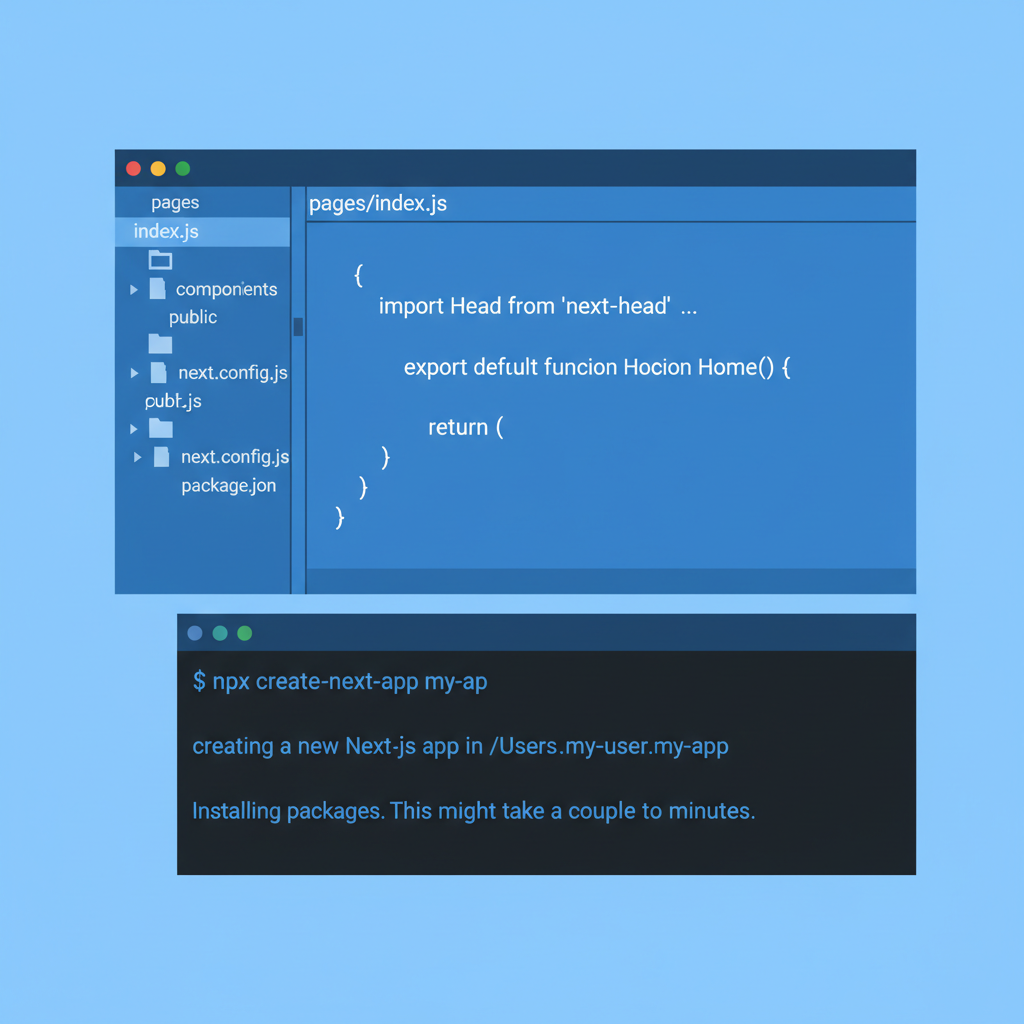
New Trend Fencing nails it - seamless wallet integration erases DeFi friction, making swaps feel native. For ai agent walletconnect tutorial seekers, scaffold with Next. js, @walletconnect/modal for UI fallback, and ethers. js for ABI interactions. Backend agents, powered by AutoGen swarms, divide labor: one scouts liquidity, another simulates outcomes, a third proposes via WalletConnect.
Comparison of Polygon DEXs for AI Swaps
| DEX | Avg Slippage (for $10K swap) | Gas Cost (approx. MATIC) | Liquidity Depth (top pairs, $M) | Key Features |
|---|---|---|---|---|
| QuickSwap | 0.05% | 0.005 | 450 | Low fees, high TVL 🚀 |
| SushiSwap | 0.07% | 0.006 | 320 | Multi-chain pools 🌐 |
| Dfyn | 0.09% | 0.004 | 180 | Zero migration costs 💸 |
Risk Management in Secure AI DeFi Trading
Autonomy invites pitfalls; undisciplined agents amplify losses in volatile markets. Enforce guardrails: position sizing capped at 5% of portfolio, dynamic cooldowns post-swap, and oracle price feeds to combat manipulation. Jung-Hua Liu's Medium piece on AI wallet integration advocates hybrid oversight - AI proposes, human vetoes anomalies via Telegram alerts. Polygon zkEVM bolsters this, slashing verification costs for zero-knowledge proofs of agent compliance.
Edge cases abound: network congestion spikes gas, invalidating budgets. Counter with adaptive estimation, querying multiple RPCs like Alchemy or Infura. SuperioAI's natural language layer adds usability, but developers must audit prompt injections - a rogue "swap all" intent spells ruin. Opinion: treat agents like junior analysts; rigorous stress-testing uncovers flaws, much as fundamental analysis reveals overvalued stocks.
HeyElsa's co-pilot model extends this, autonomously paying gas from agent sub-wallets while optimizing routes. For production, integrate anomaly detection ML models flagging deviations from baseline behavior. Venly's client-side emphasis ensures wallets, not agents, hold keys - a non-negotiable for secure ai defi trading.
Scaling to Production: Best Practices and Horizons
Deploying demands orchestration. Containerize agents with Docker, scale via Kubernetes on cloud providers supporting WebSockets. Monitor via Prometheus, alerting on session drops or failed signatures. Polygon Knowledge Layer integration via WalletConnect future-proofs against chain upgrades, maintaining bridge-less efficiency.
Challenges persist: session expiry requires auto-reconnects, and cross-chain intents complicate namespaces. Mitigate with modular permissions, revoking on inactivity. Looking ahead, WalletConnect's evolution promises AI-native primitives - intent-based sessions where agents declare strategies upfront, users tweak via sliders. Projects blending this with Polygon's AggLayer herald frictionless liquidity across ecosystems.
For developers, start small: a MATIC-USDC arb bot proves the stack. Success metrics? Positive expectancy over 1,000 cycles, sub-0.2% effective fees. This disciplined path yields sustainable alpha, echoing value investing tenets - patience uncovers persistent edges in autonomous polygon swaps. Polygon DeFi, turbocharged by AI agents, positions early builders at the vanguard of decentralized autonomy.




No comments yet. Be the first to share your thoughts!